Introduction
The first time I noticed a dark spot on my tooth, I froze. Was it just a stain, or was it something worse?
That’s when I started hearing the term cavity everywhere—friends, dentists, and even online forums talking about “tooth decay” or “cavity spots.”
If you’ve ever wondered what does a cavity look like or how to tell the difference between a harmless spot and a problem, you’re not alone. Let’s break it down in a simple, easy-to-understand way.
Quick Answer
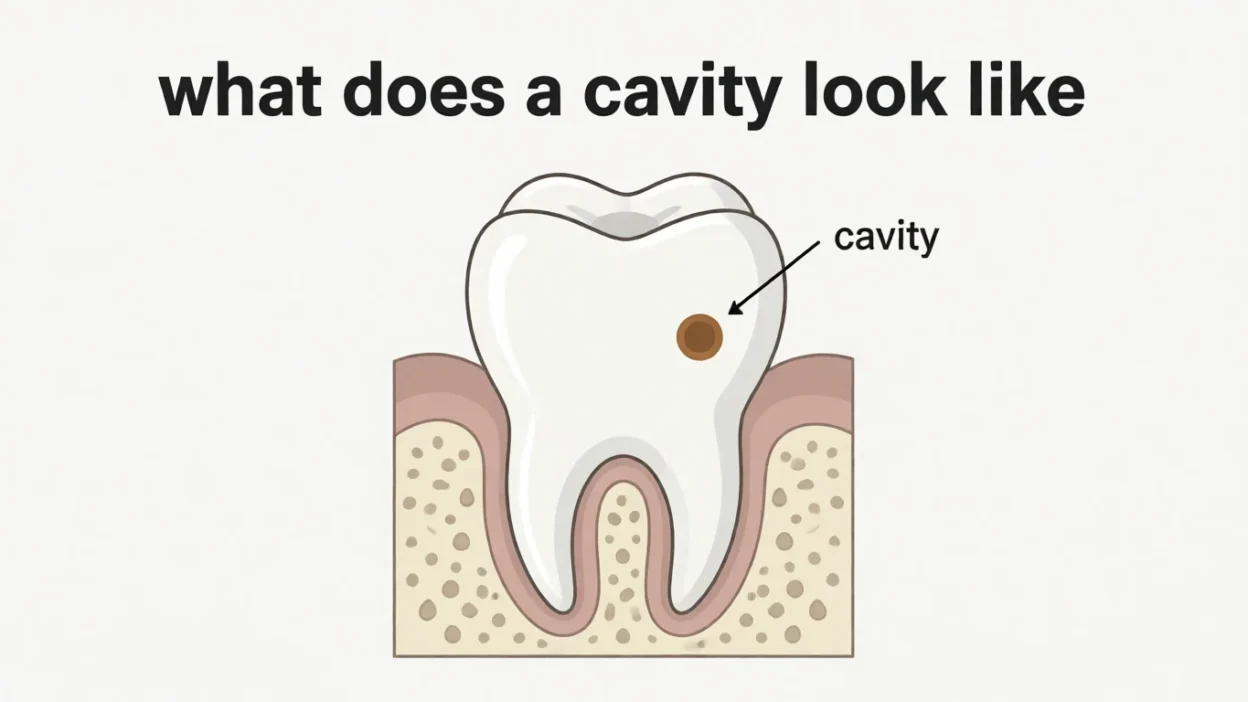
A cavity usually looks like a dark brown or black spot on a tooth, sometimes with visible holes, pits, or discoloration.
What Does a Cavity Look Like?
A cavity is tooth decay caused by bacteria eating away at your enamel. It starts small but can grow if untreated.
Plain-English Description
Cavities can appear as:
- Small dark spots on the tooth surface
- Holes or pits in the enamel
- Brown, black, or gray discoloration
- White chalky areas where enamel is weakened
Early cavities may be barely noticeable, while advanced cavities can look large and obvious.
Why Cavities Happen
- Bacteria in your mouth produce acids
- Acid eats away at the enamel
- Sugar and poor oral hygiene speed up the process
Simple Example
- i noticed a tiny brown spot near my molar—it was a cavity starting
Bold summary: A cavity looks like a small dark or discolored spot or hole in the tooth caused by decay.
Stages of a Cavity
Cavities develop in stages, which affects how they look.
- Early Decay – white or chalky spots on enamel
- Enamel Decay – small brown or black spots appear
- Dentin Decay – cavity grows, visible hole forms
- Advanced Decay – large holes, dark spots, possible tooth pain
Recognizing a cavity early can prevent bigger problems.
Where Cavities Usually Form
Cavities can appear anywhere on teeth, but some spots are more common.
- Between teeth – tricky to see, often caught by X-rays
- Chewing surfaces – pits and grooves on molars
- Near the gum line – plaque builds up easily
- Exposed root surfaces – in older adults
Tone of Observation
- Casual check at home: spotting discoloration
- Dental professional: thorough inspection and X-rays
Realistic Examples of How Cavities Look
- tiny brown dot on my molar
- black pit near the back tooth
- white chalky spot on front tooth
- hole in chewing surface, feels rough
- tooth looks gray and slightly crumbling
- sensitive tooth with small dark mark
- dark line between teeth
How to Tell a Cavity From a Stain
Not every dark spot is a cavity. Here’s how to tell:
Key Differences
- Stains: surface-level, removable with brushing, smooth
- Cavities: deeper, may form holes, feel rough or sensitive
Comparison Table
| Feature | Cavity | Stain |
|---|---|---|
| Color | brown, black, or gray | yellow, brown, or light discoloration |
| Surface | rough or pit | smooth |
| Sensitivity | possible | none |
| Worsens over time | yes | usually no |
When to See a Dentist
It’s important to visit a dentist if you notice:
- dark spots that don’t go away
- visible holes or pits
- tooth pain or sensitivity
- bad breath or taste
- spreading discoloration
Early treatment can prevent bigger cavities and tooth loss.
Preventing Cavities
You can reduce the risk of cavities with simple steps:
- brush teeth twice daily
- floss daily
- limit sugary foods and drinks
- visit a dentist regularly
- consider fluoride toothpaste or treatments
Good habits help keep teeth healthy and cavities away.
FAQs About What Does a Cavity Look Like
1. What does a cavity look like at first?
Small white or chalky spots on enamel.
2. Can cavities be black or brown?
Yes, especially as decay progresses.
3. Do cavities always hurt?
Not always; early cavities may be painless.
4. Can cavities be seen without a dentist?
Sometimes, but many need X-rays to detect hidden decay.
5. How fast do cavities grow?
It varies; some progress quickly, others slowly over months.
6. Can a cavity turn back into healthy enamel?
No, once enamel is gone, it cannot regenerate; treatment is needed.
7. Are cavities contagious?
No, but bacteria causing cavities can spread via saliva.
Final Thought
So, what does a cavity look like? It can start as a small white spot, then turn brown or black, sometimes forming holes or pits on your teeth.
Recognizing it early through regular checks, dental visits, and good oral hygiene can save your teeth and prevent pain. Cavities are common, but simple care can keep your smile healthy.