You’re outside enjoying nature, maybe walking through grass or playing with a pet. Later, you feel a tiny bump on your skin and wonder… is that a bug bite or something else?
You grab your phone and search, “what does a tick look like?” because ticks are small and easy to miss. Many people first learn about ticks after hearing a warning from a friend or seeing a scary post online.
The truth is, once you know what to look for, ticks become much easier to spot. This guide will help you understand their size, shape, color, and how they appear on skin in a clear and simple way.
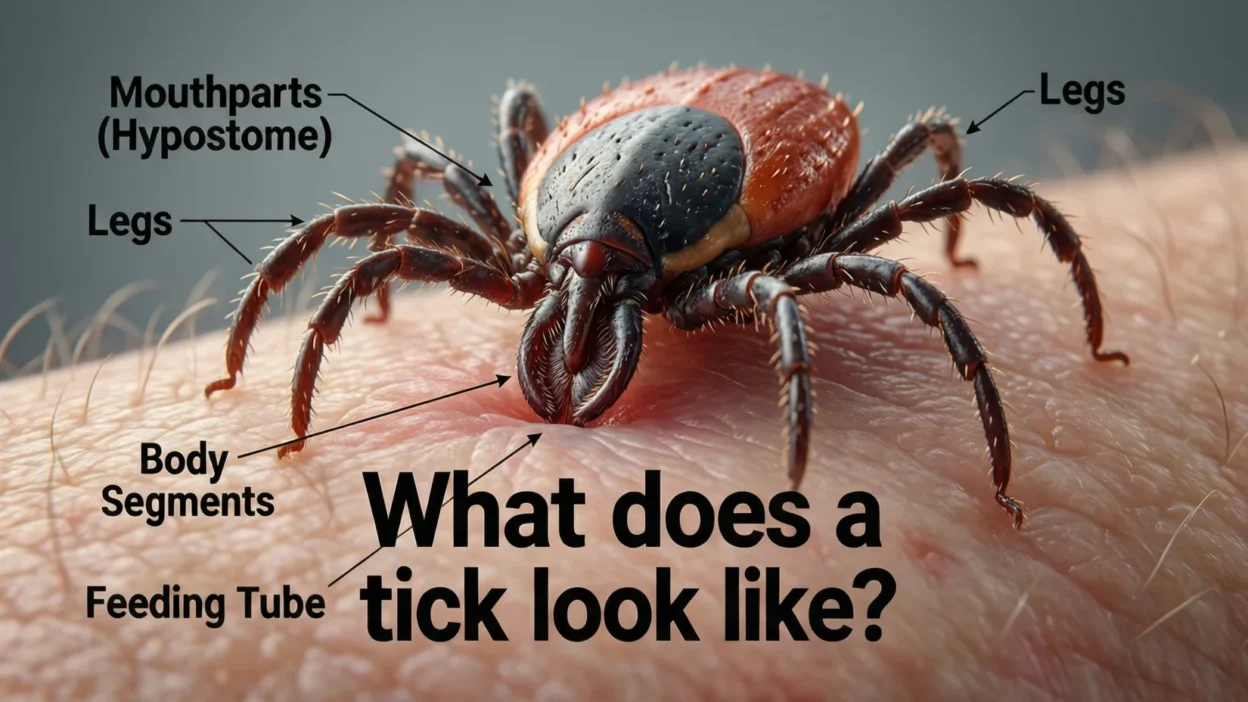
Quick Answer: A tick looks like a small, round or oval bug with eight legs, often brown or black, and it can swell bigger and lighter in color after feeding on blood.
what does a tick look like on skin and in real life?
A tick is a tiny parasite that attaches to animals or humans to feed on blood. Even though they’re very small, they have clear physical features that make them different from other insects.
basic appearance
- shape: flat and oval before feeding
- size: as small as a poppy seed when young
- legs: eight legs (ticks are related to spiders)
- color: brown, black, reddish, or grayish
- body: becomes round and swollen after feeding
before and after feeding
- before feeding: tiny, flat, and hard to notice
- after feeding: larger, round, and pale or gray
plain-english explanation
Imagine a tiny seed with legs stuck to the skin. When it drinks blood, its body expands like a small balloon. That change in size is one of the biggest clues that you’re looking at a tick.
why identification matters
- helps you remove ticks safely
- lowers the risk of infection
- prevents confusion with pimples or moles
- protects pets and family members
short example sentence
“i checked my leg and saw a tiny brown oval bug — it looked like a tick.”
bold summary: a tick is a tiny oval bug with eight legs that may look flat when small and swollen after feeding on blood.
where do people usually see ticks?
Ticks live outdoors but are often noticed on skin, clothing, or pets after spending time outside. Knowing common places helps you understand when to check for them.
common outdoor environments
- tall grass and weeds
- wooded areas and forests
- gardens and backyards
- hiking trails and parks
- animal fur or bedding
common body locations
- behind knees
- around the waist
- under arms
- scalp and hairline
- behind ears
- around ankles or socks
tone and context of discussion
- tone: neutral and educational
- usage context: health discussions, online forums, social media safety posts
- formality: can be casual in chats but also used in medical conversations
Many people first learn about tick appearance from social media posts or online health discussions. That’s why clear visual descriptions are helpful.
realistic online chat examples about tick appearance
Here are natural, modern chat-style conversations written in lowercase to reflect real online messages:
- “i found a tiny brown bug on my arm… does that sound like a tick?”
- “it looked like a small seed with legs so yeah probably a tick.”
- “mine was flat at first but later it got big and round.”
- “check behind your knees ticks love hiding there.”
- “i thought it was a mole but then it moved 😭.”
- “if it has eight legs and sticks to skin it might be a tick.”
- “my dog had one and it looked like a gray balloon.”
- “i saw one after hiking it was super tiny like a dot.”
- “google pics helped me figure out what a tick looks like.”
These examples show how people casually describe tick appearance in online conversations.
when to be concerned about a tick and when not to panic
Not every bug bite is a tick, but it’s important to know when to act quickly and when to stay calm.
do (what you should do)
- check skin after outdoor activities
- look for small oval bugs attached firmly
- use tweezers to remove ticks carefully
- clean the area after removal
- watch for rash or flu-like symptoms
don’t (what you should avoid)
- don’t squeeze ticks with bare fingers
- don’t burn or crush them on skin
- don’t ignore a tick that stays attached
- don’t assume every bump is harmless
- don’t panic — most tick bites are treatable
quick comparison table
| context | example situation | why it matters |
|---|---|---|
| after hiking | tiny oval bug stuck to skin | likely a tick — remove safely |
| small red bump | itchy but no bug present | could be a normal insect bite |
| dark mole | hasn’t moved or changed | probably not a tick |
| swollen gray bug | attached to pet’s fur | common sign of feeding tick |
This helps you separate real ticks from other skin marks or harmless bugs.
bugs and things people confuse with ticks
Many small objects or insects can look similar at first glance. Knowing the differences can prevent worry and confusion.
common lookalikes
1. fleas
tiny jumping insects usually found on pets. smaller and more active than ticks.
2. bed bugs
flat reddish bugs that bite at night but don’t stay attached to skin.
3. spiders
also have eight legs, but they don’t attach and feed like ticks.
4. moles or skin tags
skin growths that don’t move or change size quickly.
5. small scabs
dark spots that may look like bugs but are part of healing skin.
quick comparison table
| lookalike | key difference | when to suspect a tick instead |
|---|---|---|
| flea | jumps and moves fast | tick stays attached |
| bed bug | hides after biting | tick remains on skin |
| mole | part of skin | tick may move or swell |
| spider | doesn’t latch on | tick stays fixed and feeds |
Understanding these differences makes tick identification much easier.
frequently asked questions about what does a tick look like
1. how small is a tick before feeding?
Some ticks are as small as a poppy seed. That’s why they’re easy to miss until they grow larger after feeding.
2. what color are ticks?
They can be brown, black, reddish, or gray. After feeding, they often look pale gray or light brown.
3. do ticks always look round?
No. Before feeding they are flat and oval. After feeding they become round and swollen.
4. can ticks look like moles or skin tags?
Yes, especially when small. If the spot has legs or changes size quickly, it might be a tick.
5. where do ticks usually attach?
Common areas include ankles, behind knees, under arms, scalp, and waistline.
6. can you feel a tick bite?
Many people don’t feel the bite because ticks release a mild numbing substance.
7. should i see a doctor after a tick bite?
You should consider medical advice if you notice rash, fever, body aches, or unusual symptoms after a bite.
final thought
Learning what does a tick look like helps you stay safe and confident during outdoor activities. Ticks are small oval bugs with eight legs that may appear flat before feeding and swollen afterward.
They are commonly found in grassy or wooded areas and can attach to skin or pets without being noticed right away. By understanding their size, color, and behavior, you can quickly tell the difference between a tick and other insects or skin spots.
Regular checks after outdoor time, proper removal, and awareness of symptoms all play an important role in protecting your health. Clear knowledge turns fear into simple, smart action.