Introduction
The first time most of us notice am and pm isn’t in a textbook—it’s in real life. Maybe you saw a message like “meet me at 7 pm” in a group chat, or your phone alarm said 6:30 am and you wondered why mornings get such a weird label.
You probably didn’t question it much back then. But at some point—usually when setting alarms, booking appointments, or chatting online—the question pops up: what do am and pm actually stand for?
If you’ve ever felt curious but slightly embarrassed to ask, you’re not alone. Let’s break it down in the simplest way possible.
Quick Answer:
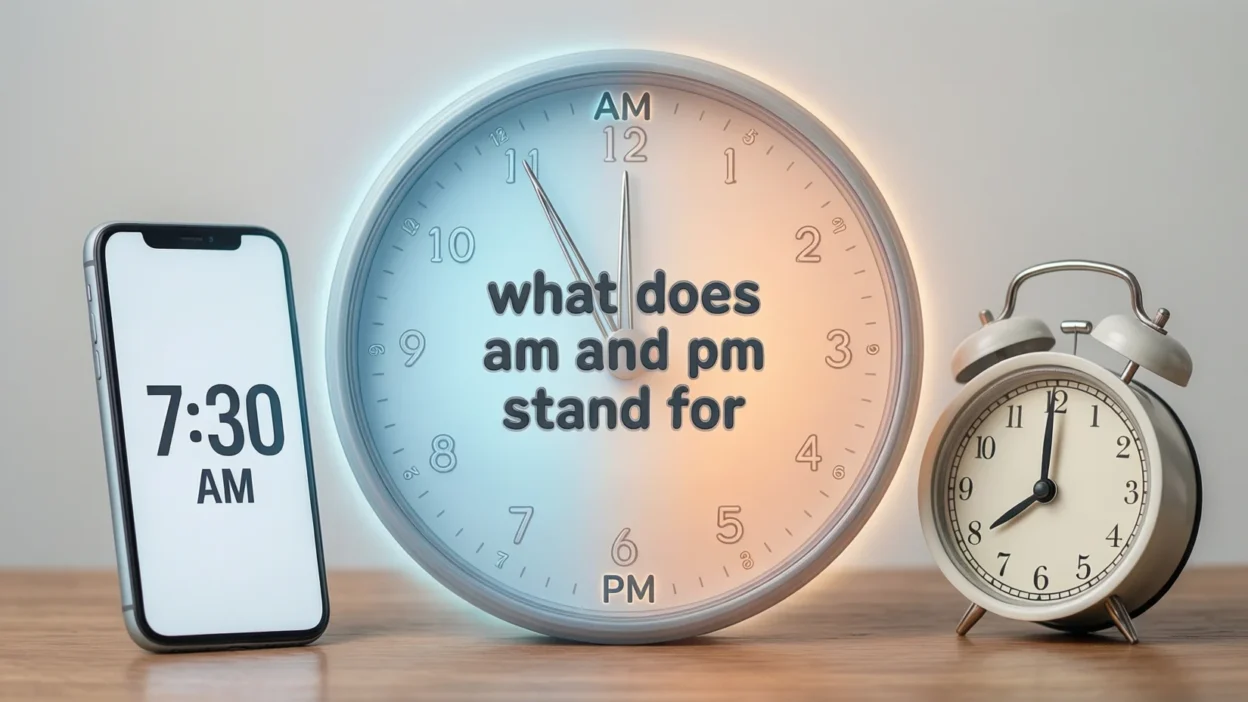
AM stands for ante meridiem (before noon), and PM stands for post meridiem (after noon).
What Does AM and PM Stand For? (Meaning Explained Simply)
The terms AM and PM come from Latin, not modern slang or texting culture.
- AM = Ante Meridiem
This means before midday (noon). - PM = Post Meridiem
This means after midday (noon).
In plain English, AM covers the first half of the day, from midnight until just before noon. PM covers the second half, from noon until just before midnight.
Why do people use AM and PM?
People use am and pm to avoid confusion when using a 12-hour clock. Instead of saying “7 in the morning” or “7 at night,” am and pm make time clear and universal.
One simple example
- i wake up at 6 am and sleep around 11 pm.
Bold summary: AM means before noon, and PM means after noon in the 12-hour clock system.
Where Are AM and PM Commonly Used?
You’ll see am and pm almost everywhere in daily life, both online and offline.
Common places you’ll notice them:
- texting and chat messages
- social media posts and captions
- comments and dms
- alarm clocks and phone reminders
- school and work schedules
- gaming chats and event timings
- appointment bookings and travel tickets
Tone and formality
- Tone: neutral
- Style: works in both casual and formal settings
You can safely use am and pm in texts with friends and in professional emails. That’s why they’ve stayed popular for centuries.
Realistic Texting and Chat Examples (Modern Style)
Here are 9 natural conversation examples showing how people actually use am and pm online:
- i’ll call you at 8 pm, don’t be late
- my alarm goes off at 5 am 😭
- the match starts at 9 pm tonight
- let’s meet at 11 am near the cafe
- bro why are you awake at 3 am
- office hours are 10 am to 6 pm
- posting this at 12 am hits different
- can we reschedule to 4 pm instead?
- i slept at 2 am and now i regret everything
These examples show how am and pm fit naturally into modern texting culture.
When to Use and When NOT to Use AM and PM
Knowing when to use am and pm helps you sound clear and confident.
✅ Do use AM and PM when:
- using the 12-hour clock
- setting alarms or reminders
- sharing event or meeting times
- texting someone in a different routine or time zone
- posting schedules online
❌ Don’t use AM and PM when:
- using the 24-hour clock (like 18:00 or 06:00)
- the time is already obvious from context
- writing informal notes where time doesn’t matter
Small comparison table
| Context | Example Phrase | Why It Works / Doesn’t |
|---|---|---|
| texting a friend | meet me at 7 pm | clear and casual |
| work email | meeting at 10 am | professional and clear |
| military time | 18:00 pm | incorrect (pm not needed) |
| obvious context | see you tonight at 9 pm | “pm” is optional but fine |
AM vs PM: Common Confusions Explained
A lot of people get confused about 12 am and 12 pm.
- 12 am = midnight
- 12 pm = noon
A helpful trick:
- AM starts the day
- PM finishes the day
If it’s dark and the day hasn’t started yet, it’s usually am. If lunch has passed, you’re in pm territory.
Similar Terms and Alternatives
Even though am and pm are standard, people sometimes use alternatives depending on context.
| Term | Meaning | When to Use |
|---|---|---|
| morning | early part of the day | casual talk |
| afternoon | after noon | informal chats |
| evening | late day hours | social plans |
| night | late pm hours | relaxed texting |
| 24-hour time | military-style time | travel, tech, global chats |
Example:
- let’s meet in the afternoon (instead of 3 pm)
These alternatives are useful when exact time isn’t important.
Why AM and PM Still Matter in Texting Culture
Even with smartphones and digital clocks, am and pm are still important.
They:
- prevent misunderstandings
- work across cultures
- keep schedules clear
- fit both casual and formal messages
In online chats, a missing am or pm can completely change the meaning of a message. Saying “meet at 8” is risky. Saying “meet at 8 pm” is safe.
FAQs About AM and PM
1. what does am and pm stand for?
AM means before noon and PM means after noon.
2. is am morning or night?
AM is morning and early night hours after midnight.
3. is 12 am midnight or noon?
12 am is midnight, not noon.
4. do people still use am and pm in texting?
Yes, am and pm are very common in texting and social media.
5. is using am and pm formal?
No. The tone is neutral, so it works everywhere.
6. can am and pm be written lowercase?
Yes. In casual chats, am and pm are often lowercase.
7. why not just use the 24-hour clock?
Some countries prefer it, but am and pm are easier for daily conversation.
Final Thoughts
So, what does am and pm stand for? They’re simple time markers that help the world stay on schedule. AM means before noon. PM means after noon.
Whether you’re texting a friend, setting an alarm, or posting online, these two little abbreviations keep communication clear. They’re not slang, they’re not outdated, and they’re definitely not going anywhere.
Once you understand them, telling time becomes effortless—and way less confusing.