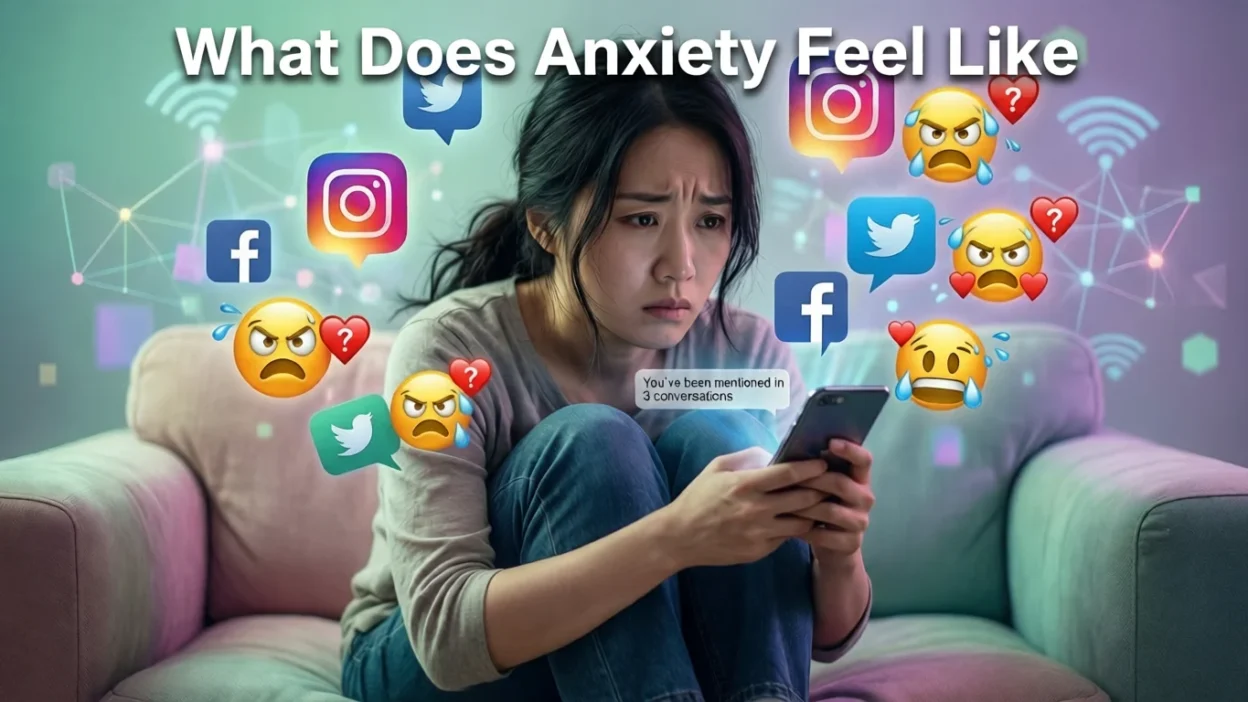
Have you ever been scrolling through your social media feed or texting a friend and seen someone say they’re “anxious” or ask, “do you know what anxiety feels like?”
At first, it might seem simple, but reading it in a chat can spark curiosity or even a little worry.
Maybe you’ve felt a sudden rush in your chest or a nervous flutter when a message popped up, and it made you wonder—what does anxiety actually feel like?
Let’s break it down in a way that’s relatable, easy to understand, and fits naturally into how we talk online today.
Quick Answer:
Anxiety feels like a mix of nervousness, worry, restlessness, and physical tension that can affect your mind and body.
What Does Anxiety Feel Like? Meaning Explained
Anxiety is not just a word; it’s a sensation that impacts both your mind and body. Unlike casual worry, anxiety often comes with a persistent feeling of unease or dread, even if there’s no immediate danger. People use this term in conversations, chats, or online posts to describe moments when they feel on edge, stressed, or mentally overwhelmed.
Plain-English Explanation:
Anxiety is that jittery, uneasy feeling you get before something important, like a test, presentation, or social event—but it can also appear randomly, without a clear reason. Your heart might race, your thoughts spiral, or your stomach might feel upset.
Why People Use It:
Online, people use the term anxiety to quickly express mental stress or tension in a way that others will instantly understand. Saying “I’m feeling anxious” is faster and more relatable than explaining every physical or emotional symptom.
Example Sentence:
- “Ugh, my anxiety is acting up again before this zoom call.”
Summary:
Anxiety is the body and mind reacting to stress, worry, or fear, often showing as restlessness, tension, and nervous thoughts.
Where “Anxiety” Is Commonly Used Online
People use anxiety in a variety of digital spaces to convey how they feel. Here’s where it shows up most often:
- Texting and DMs: Friends might share feelings casually (“i’m full-on anxiety rn”). Tone is informal and relatable.
- Social Media Platforms: Twitter, Instagram, TikTok, and Reddit often have posts or comments where users describe anxious moments. Tone is usually casual to neutral.
- Comments and Forums: In gaming chats, Reddit threads, or Discord servers, users express stress or pre-event nervousness. Tone is informal and community-driven.
- Gaming Chats: Players use it to describe tension or worry during a game (“low-key anxiety about this boss fight”). Tone is casual and playful.
Across platforms, anxiety is mostly used informally, making it relatable to peers rather than formal writing or professional communication.
Realistic Chat Examples of “Anxiety”
Here are 8 natural examples of how people use the term in online conversations:
- “omg my anxiety is through the roof waiting for this text”
- “i get major anxiety just thinking about monday lol”
- “low-key anxiety about showing up to that party”
- “my anxiety is screaming rn bc of this group chat”
- “idk why but this meeting gives me actual anxiety”
- “anxiety hitting different when ur phone dies mid-chat”
- “me: chill me: full-on anxiety mode”
- “this exam is causing serious anxiety vibes”
When to Use and Not Use the Term
Using anxiety online can help convey your feelings, but it’s important to know when it’s appropriate.
✅ DO:
- Share genuine feelings of stress or nervousness
- Use in casual chats with friends, peers, or supportive communities
- Express mental tension in gaming or social discussions
❌ DON’T:
- Use anxiety to exaggerate minor issues in a way that might seem insensitive
- Apply it in formal emails, professional reports, or serious medical discussions
- Use it to describe unrelated emotions like boredom or mild irritation
Comparison Table:
| Context | Example Phrase | Why It Works / Doesn’t Work |
|---|---|---|
| Texting friends | “my anxiety is real rn about this test” | ✅ Works — relatable, informal |
| Work email | “I have anxiety about the meeting” | ❌ Doesn’t work — too casual for professional tone |
| Gaming chat | “full-on anxiety during this boss fight” | ✅ Works — casual, humorous, relatable |
| Social media exaggeration | “anxiety bc i can’t find my pen” | ❌ Doesn’t work — trivializes real anxiety |
Similar Slang Words or Alternatives
Sometimes, people want a shorter or different way to express stress online. Here are some alternatives:
| Slang / Word | Meaning | When to Use |
|---|---|---|
| stressed | Feeling overwhelmed or pressured | Everyday casual chats |
| nervous | Mild anxiety or anticipation | Before events or tests |
| jittery | Physically restless from worry | Describing bodily reactions |
| shook | Shocked or startled, sometimes with anxious vibes | Social media posts, informal chats |
| panicked | Sudden, intense anxiety | Moments of urgency or surprise |
| freaked out | Temporary, heightened anxiety | Casual, exaggerated online use |
FAQs About “Anxiety”
1. What does anxiety mean in texting?
It’s used to show that someone feels stressed, nervous, or on edge, usually in a casual, relatable way.
2. Is the tone formal or informal?
Mostly informal and casual, suitable for friends, DMs, or social media.
3. Who uses this term online?
Primarily teens and young adults, but anyone sharing feelings online may use it.
4. Can anxiety be misunderstood in chats?
Yes, exaggerating anxiety for small issues might confuse or upset others. Context matters.
5. Are there shorter ways to say it?
Yes, words like stressed, nervous, jittery, or shook are commonly used as alternatives.
6. Should I use “anxiety” in professional chats?
No, it’s better reserved for casual or informal online conversations.
7. How is anxiety different from stress?
Stress usually has an identifiable cause, while anxiety can be persistent and appear without a clear trigger.
Final Thought
Understanding what anxiety feels like helps us recognize mental and physical signals, communicate feelings online, and support others who might be experiencing it.
While the word is commonly used in texting, social media, and chats to convey nervousness or tension, it’s important to respect its meaning and avoid exaggeration. By using it correctly, we can express ourselves clearly, connect with peers, and normalize conversations about mental health in the digital age.