Introduction
The first time I saw “ASL” in a chat, it was in a casual conversation with a new friend online.
The message simply said, “asl?” I paused and wondered—is this a typo, some new slang, or something else?
Later, I started noticing ASL everywhere—in social media, texting apps, forums, and even gaming chats. If you’ve ever asked yourself “what does asl mean?”, you’re not alone.
Let’s break it down in a simple, clear way that explains both its texting meaning and other common uses.
Quick Answer
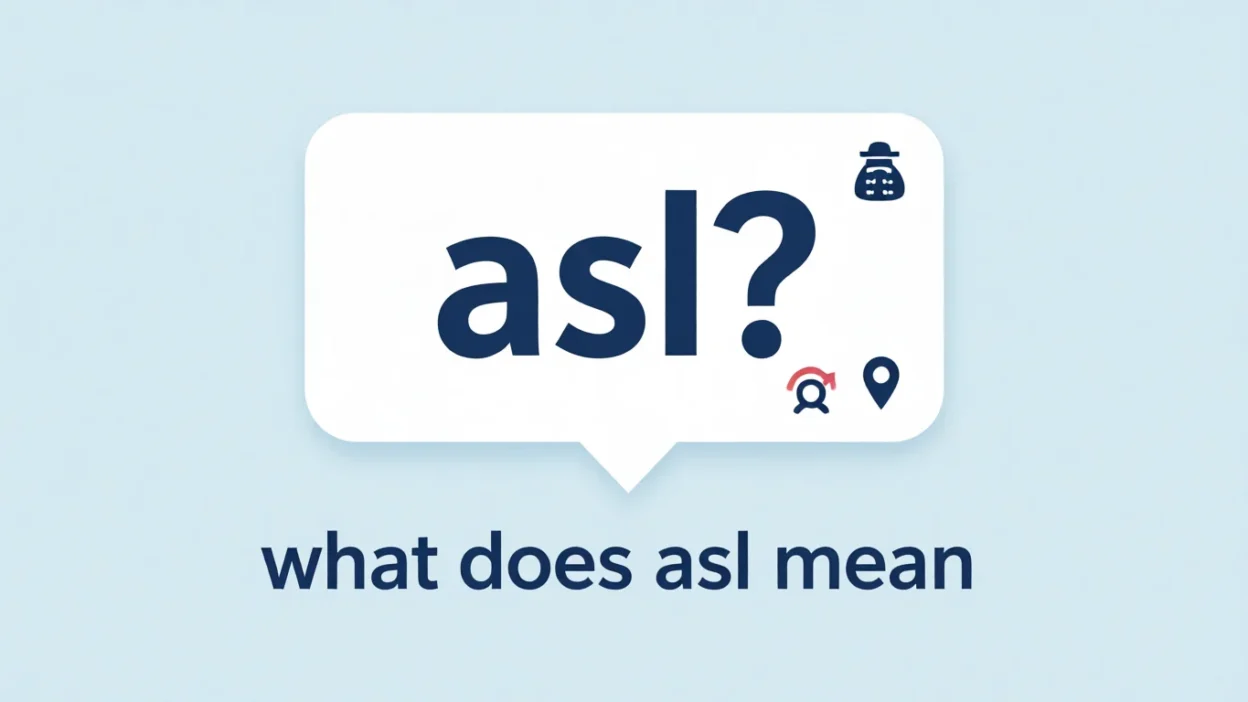
ASL usually stands for “age, sex, location,” a shorthand used in online chats to ask someone about themselves.
What ASL Means in Text and Online Chats
ASL is primarily used as a texting abbreviation in casual online conversations.
Plain-English Explanation
- Age: How old someone is
- Sex: Male or female (sometimes used loosely)
- Location: Where someone lives or is from
People use ASL to quickly get to know someone without typing full questions.
Example
- hey, asl?
- 23, female, texas
Bold summary: ASL means “age, sex, location” and is used in casual online chats to learn basic information about someone.
Where ASL Is Commonly Used
Typical Online Spaces
- instant messaging apps
- chat rooms
- online forums
- gaming chats
- social media direct messages
Tone
- Casual: yes
- Informal: yes
- Neutral: sometimes
- Formal: ❌ no
It’s considered informal shorthand, not something used in professional or formal contexts.
Realistic Conversation Examples Using ASL
Here are natural, lowercase examples that reflect real online chats:
- asl?
- hey, asl if you don’t mind
- asl? just curious
- asl? i like to know who i’m talking to
- asl? lol
- asl? 18/f/nyc
- asl? not looking for anything serious
- asl? want to play games online
When to Use ASL (and When Not To)
✅ When to Use ASL
- chatting casually with strangers online
- in a friendly chatroom
- when both people are comfortable sharing info
❌ When Not to Use ASL
- first message without context
- professional or work-related chats
- if the other person seems uncomfortable
Comparison Table
| Context | Example Phrase | Why It Works / Doesn’t |
|---|---|---|
| chatroom | asl? | casual and expected |
| gaming chat | asl? | natural and informal |
| work email | asl? | inappropriate |
| professional forum | asl? | too casual |
Other Meanings of ASL
ASL can also mean different things depending on context:
| Term | Meaning | Common Use |
|---|---|---|
| American Sign Language | a visual language using hand signs | communication with Deaf or partially deaf people |
| Age, Sex, Location | online shorthand | casual chats |
| Above Sea Level | measurement term | geography, maps |
The meaning is usually clear based on context.
FAQs About What Does ASL Mean
1. What does ASL stand for in texting?
Age, sex, location.
2. Is ASL still commonly used?
It’s less popular now due to modern social apps, but still seen occasionally.
3. Can ASL be rude?
Not inherently, but asking too soon may feel intrusive.
4. Does ASL always mean American Sign Language?
No, context matters—text chats usually mean “age, sex, location.”
5. Can you ask ASL in a dating app?
Yes, but phrasing politely is recommended.
6. Is ASL informal?
Yes, it’s casual and shorthand for quick conversations.
Final Thought
So, what does ASL mean? In texting and online chats, it usually stands for age, sex, location, a shorthand way to ask basic information about someone.
Context is key, though, because ASL can also mean American Sign Language or other terms in different settings. Used thoughtfully, it’s a quick and casual way to start a conversation online.