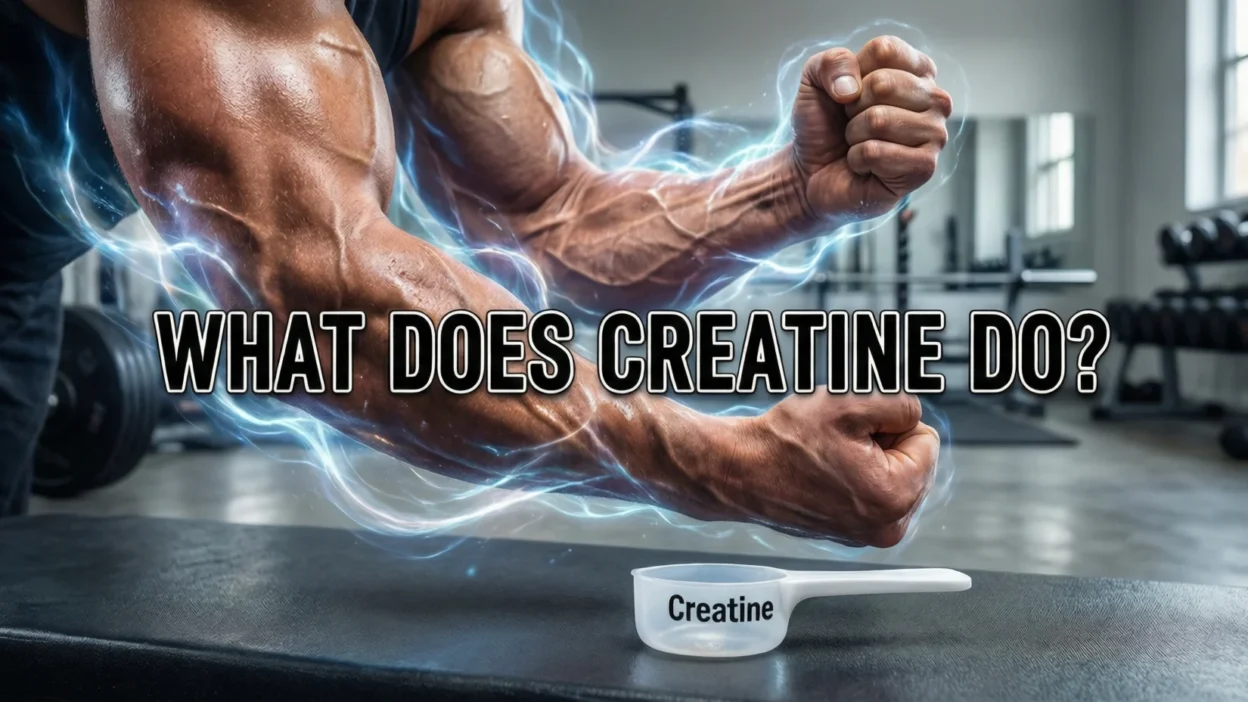
The first time most people hear about creatine, it’s usually at the gym, in a TikTok comment, or from a friend who suddenly looks stronger than last month.
Someone casually says, “bro, just take creatine,” and moves on like it’s common knowledge. But for you, questions start popping up. Is it safe? Is it natural? Will it change your body?
If you’ve ever searched what does creatine do, you’re not alone. Creatine is one of the most popular fitness supplements in the world—and also one of the most misunderstood.
This article breaks it all down in a simple, honest, and easy-to-understand way.
Quick Answer:
Creatine helps your muscles produce more energy, allowing you to lift heavier, perform better, and build muscle more effectively.
What Does Creatine Do in the Body?
Creatine is a naturally occurring compound found in your muscles. Your body already produces it, and you also get small amounts from foods like red meat and fish.
Plain-English explanation
Creatine helps your muscles make quick energy during short, intense activities such as:
- weightlifting
- sprinting
- jumping
- high-intensity workouts
It works by increasing ATP (adenosine triphosphate), which is your muscles’ main energy source during powerful movements.
Why this matters
More ATP means:
- more strength
- more power
- better workout performance
- the ability to train harder
Simple example
Think of creatine like a power boost that helps your muscles go a little longer and a little stronger.
Bold summary: Creatine increases muscle energy, helping you perform better during intense exercise.
Main Benefits of Creatine
Creatine is one of the most researched supplements in fitness, with strong scientific support.
1. Improves strength and power
People who use creatine often experience:
- heavier lifts
- more explosive strength
- improved athletic performance
This makes it popular among lifters, athletes, and gym beginners alike.
2. Supports muscle growth
Creatine helps muscle growth by:
- allowing harder training
- increasing muscle cell hydration
- improving workout volume
Over time, this leads to visible muscle gains.
3. Boosts workout performance
You may notice:
- more reps per set
- less early fatigue
- better overall training quality
This is especially helpful for high-intensity training.
4. Helps recovery
Some users report:
- reduced muscle soreness
- faster recovery between sessions
What Creatine Does NOT Do
There are many myths about creatine, so let’s clear them up.
Creatine does NOT:
- act like steroids
- instantly make you bulky
- directly burn fat
- harm kidneys in healthy adults (when used correctly)
Creatine is a performance supplement, not a shortcut.
Creatine in Fitness Culture and Social Media
Creatine is often mentioned casually online.
Common phrases you’ll see:
- “creatine gains are real”
- “just started creatine”
- “natty + creatine”
- “creatine loading phase”
Tone and vibe
- tone: casual
- formality: informal
- emotion: motivation, confidence
Social media can exaggerate results, so realistic expectations matter.
Realistic Conversation Examples
Here’s how people naturally talk about creatine online:
- “creatine helped my lifts a lot”
- “i feel stronger since starting creatine”
- “it’s not steroids, just creatine”
- “my workouts feel better on creatine”
- “creatine made my muscles look fuller”
- “remember to drink water with creatine”
- “thinking of hopping on creatine”
How to Use Creatine (Beginner-Friendly Guide)
Best type to use
Creatine monohydrate (most studied and affordable)
Recommended dosage
- 3–5 grams per day
- take it every day, even on rest days
Loading phase (optional)
Some people do:
- 20g per day for 5–7 days
- then 3–5g daily
This is optional. Creatine still works without loading.
Best time to take it
- anytime during the day
- many people take it after workouts or with meals
Water intake
Drink enough water. Creatine draws water into your muscles.
When Creatine Is Useful (And When It’s Not)
✅ Creatine is good for:
- weight training
- bodybuilding
- sports requiring power and speed
- beginners and experienced lifters
❌ Creatine may not be necessary if:
- you don’t train intensely
- you expect instant results
- your workouts are inconsistent
Comparison Table
| activity | does creatine help? | reason |
|---|---|---|
| weightlifting | yes | boosts strength |
| sprinting | yes | improves power |
| walking | no | low intensity |
| irregular training | limited | needs consistency |
Is Creatine Safe?
For healthy adults, creatine is considered very safe when used correctly.
Safety facts:
- studied for decades
- safe at recommended doses
- non-addictive
- naturally present in the body
If you have kidney problems or medical conditions, consult a doctor first.
Creatine vs Other Supplements
Protein powder
- supports muscle repair
- does not boost energy
Pre-workout
- increases focus and alertness
- short-term effect
BCAAs
- minor benefit
- less effective than creatine
Creatine remains one of the best-value supplements available.
Common Myths About Creatine
People often believe:
- creatine is a steroid
- creatine causes fat gain
- creatine is unsafe
- creatine is only for bodybuilders
Most of these are false and not supported by science.
FAQs
What does creatine do for muscles?
It helps muscles produce more energy, improving strength and performance.
Does creatine make you gain weight?
You may gain water weight in muscles, not fat.
How long does creatine take to work?
Usually 1–4 weeks with daily use.
Is creatine safe for beginners?
Yes, for healthy adults.
Do you need to cycle creatine?
No, cycling is not necessary.
Can women take creatine?
Yes, creatine works the same for women.
Final Thoughts
So, what does creatine do? It increases muscle energy, improves workout performance, and supports strength and muscle growth over time.
It’s not magic and not a steroid—but when combined with proper training, nutrition, and consistency, creatine is one of the most effective and trusted supplements in fitness today.