Imagine scrolling through a company’s website, a school brochure, or a news feed and you see “DEI initiatives” mentioned again and again.
It can feel confusing at first—especially if you’re not sure whether it’s just buzzwords, a job requirement, or something important to society.
If you’ve ever wondered what does DEI stand for and what it really means, you’re in the right place.
Let’s break it down clearly, simply, and with real-world context so you understand exactly what DEI is and why it’s talked about so much today.
Quick Answer:
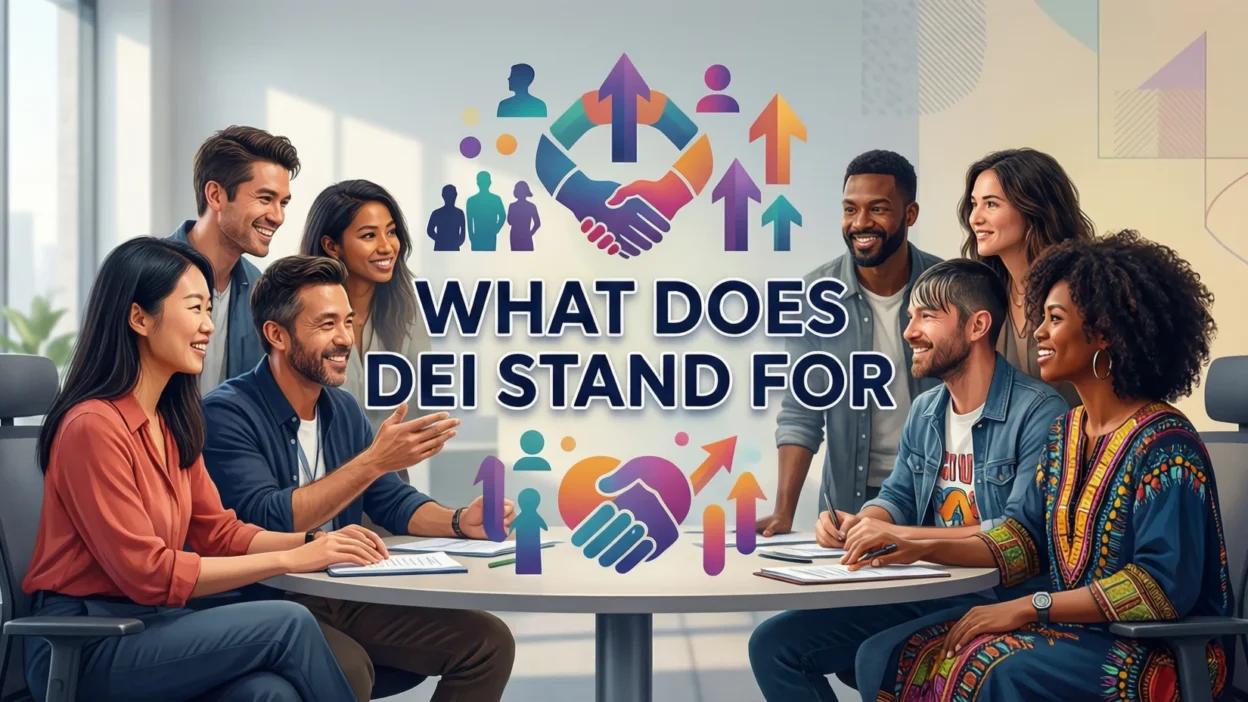
DEI stands for “Diversity, Equity, and Inclusion,” a framework organizations use to promote fairness, representation, and belonging for all people. (Dictionary.com)
What Does DEI Mean?
DEI is an acronym made up of three important words:
🔹 Diversity
Diversity means having many different kinds of people represented—different races, genders, ages, religions, abilities, backgrounds, and more. (Wikipedia)
🔹 Equity
Equity is about fair treatment and access—not necessarily giving everyone the same thing, but giving people what they need so they have an equal chance to succeed. (Qualtrics)
🔹 Inclusion
Inclusion means creating an environment where everyone feels welcome, respected, and included—not just present, but truly valued. (Wikipedia)
Together, DEI is about building spaces where differences are recognized, everyone gets support, and all voices are heard.
Bold summary:
DEI = Diversity (variety), Equity (fair access), Inclusion (belonging).
Why Do People Use the Term “DEI”?
DEI is used mostly in places like:
- workplaces
- schools and universities
- nonprofits and community groups
- government and policy discussions
It’s used to describe programs, policies, or values that aim to make environments fair, respectful, and welcoming for everyone—especially groups that have historically been underrepresented or excluded. (Dictionary.com)
For example, a company might talk about its “DEI strategy” to explain how it plans to hire fairly and create a culture where workers from all backgrounds feel they belong. (Qualtrics)
Realistic Examples of How DEI Is Used
Here are some ways you might see DEI in real conversations:
- “our company updated its DEI policy”
- “the school has DEI workshops every semester”
- “DEI hiring goals helped recruit more diverse candidates”
- “the DEI team is planning inclusion training”
- “DEI discussions can be tough but important”
- “everyone should feel DEI values in their workplace”
- “we want feedback on the new DEI initiatives”
- “DEI isn’t just HR, it’s how we build culture”
These examples reflect how people talk casually about DEI in real life, from rules and meetings to everyday discussions.
When to Use and When Not to Use the Term “DEI”
✅ Use DEI when:
- describing organizational goals
- talking about fairness and representation
- discussing workplace culture
- explaining policies that support underrepresented groups
❌ Avoid DEI when:
- writing in purely technical or unrelated contexts
- trying to explain unrelated concepts like math or fitness
- talking to people unfamiliar with cultural or organizational topics (without context)
| Context | Works Well? | Why |
|---|---|---|
| company blog on hiring | ✅ | clear topic |
| social media post about fairness | ✅ | fits theme |
| school math homework | ❌ | unrelated |
| recipe comment | ❌ | off-topic |
Similar Terms and Alternatives
Here are some related terms you might also see:
DEIB
Adds Belonging to DEI, highlighting emotional experience. (fairerconsulting.com)
EDI / EDI&B
Different ordering or extra term like Inclusion & Belonging. (The Oxford Review – OR Briefings)
D&I
Shorter form: Diversity & Inclusion without equity. (Dictionary.com)
Justice-focused terms
Sometimes used in expanded frameworks like DEIJ (Diversity, Equity, Inclusion, Justice). (blogs.cornell.edu)
All of these focus on making environments fairer and more inclusive—just with slightly different emphasis.
Common Misunderstandings About DEI
People sometimes think DEI means:
❌ “Lowering standards”
❌ “Favoring one group unfairly”
❌ “Only about race”
But in reality, DEI is about removing barriers and ensuring fair opportunities for everyone—not replacing merit or excluding others unfairly. (Diversity Employment)
Sometimes discussions around DEI can become politically charged or controversial, but the core idea remains focused on fairness and inclusion. (The Guardian)
FAQs About “What Does DEI Stand For”
1. What does DEI stand for?
It stands for Diversity, Equity, and Inclusion. (Dictionary.com)
2. Is DEI only for workplaces?
No — it’s used in workplaces, schools, nonprofits, and many organizations. (Wikipedia)
3. Is DEI political?
It can be part of political debate, but it’s fundamentally about fairness and inclusion. (The Guardian)
4. What’s the difference between equity and equality?
Equality means same treatment; equity means fair treatment based on needs. (Qualtrics)
5. What is DEIB?
It’s DEI + Belonging — emphasizing emotional connection and feeling valued. (fairerconsulting.com)
6. Can small companies use DEI?
Yes — it applies anywhere fairness and inclusion are goals. (Wikipedia)
Final Thought
So, what does DEI stand for? At its heart, it’s about Diversity (different people), Equity (fair access), and Inclusion (belonging)—a set of values and practices that help create fairer, more welcoming environments.
Whether you’re in a classroom, workplace, or community group, understanding DEI helps you see how people from all backgrounds can be supported and heard.