Introduction
The first time I heard about GPT, it was in a tech article, and the author casually said, “GPT is revolutionizing AI.” I paused—wait, what does GPT stand for?
Soon, I started seeing it everywhere—chatbots, AI tools, social media discussions, even memes.
If you’ve wondered what GPT actually means and why everyone is talking about it, you’re not alone.
Let’s break it down in a simple, clear way so it makes sense even if you’re not a tech expert.
Quick Answer
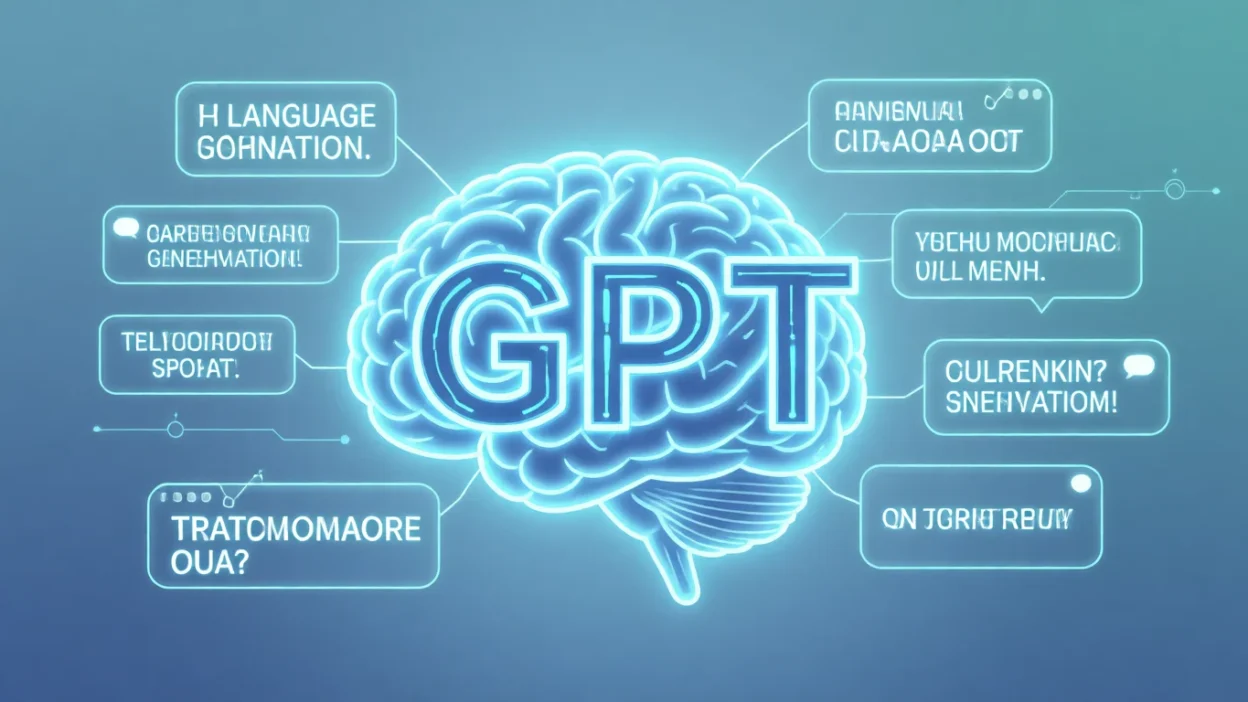
GPT stands for “Generative Pre-trained Transformer,” a type of artificial intelligence that can understand and generate human-like text.
What GPT Means in Simple Terms
GPT is a type of AI (artificial intelligence) that focuses on language.
Plain-English Explanation
- Generative – it can create text or content based on input
- Pre-trained – it’s already learned from huge amounts of text before use
- Transformer – a type of AI model architecture that processes language efficiently
In short, GPT is a smart program that can read, understand, and write text that often feels like a real human wrote it.
Why People Use GPT
- writing assistance
- answering questions
- generating ideas or content
- chatting in a natural, conversational style
Simple Example
- i asked gpt to write a poem and it created one instantly
Bold summary: GPT stands for Generative Pre-trained Transformer, an AI that understands and generates human-like text.
How GPT Works
GPT works by analyzing huge amounts of text from books, websites, and articles. It learns patterns in language and predicts the next word in a sentence, making its responses coherent and natural.
Key Points
- trained on diverse text sources
- predicts words based on context
- generates responses, summaries, stories, and more
- constantly improving with new versions
Where GPT Is Commonly Used
Applications
- Chatbots – like ChatGPT
- Content creation – blog posts, social media captions
- Customer support – answering questions online
- Education – tutoring or summarizing material
- Creative projects – writing stories, poems, or scripts
Tone
- Informal to formal, depending on use
- Can adapt to casual chat, professional writing, or technical content
Realistic Examples of GPT in Use
- i asked gpt for a recipe and it gave me step-by-step instructions
- gpt helped me rewrite my essay
- used gpt to generate social media captions
- asked gpt for a joke and it delivered
- gpt summarized a long article for me
- my friend tried gpt to write a story
- gpt explained a complex concept in simple words
Differences Between GPT and Other AI
| Feature | GPT | Other AI |
|---|---|---|
| Primary function | text generation | may focus on images, speech, or data |
| Learning method | pre-trained on text | varies |
| Flexibility | highly adaptable | task-specific |
| Common use | chat, writing, education | industry-specific tools |
Similar AI Terms You Might See
| Term | Meaning | Use Case |
|---|---|---|
| LLM | Large Language Model | GPT is one type of LLM |
| NLP | Natural Language Processing | AI understanding of language |
| AI | Artificial Intelligence | broad term for intelligent machines |
| Transformer | AI model architecture | used in GPT and other models |
| Chatbot | AI conversational agent | uses GPT for text replies |
FAQs About What Does GPT Stand For
1. What does GPT stand for?
Generative Pre-trained Transformer.
2. Is GPT only for text?
Mostly, but some versions (like GPT-4) can also process images.
3. Can GPT write like a human?
Yes, it can generate text that often feels natural and coherent.
4. Is GPT free to use?
Some platforms offer free access; others are subscription-based.
5. Is GPT safe?
Generally, yes, but outputs should be reviewed for accuracy.
6. What is the difference between GPT and ChatGPT?
GPT is the model, while ChatGPT is a specific chatbot using GPT.
7. Can GPT learn from new information?
GPT models are pre-trained, but they can be fine-tuned or updated by developers.
Final Thought
So, what does GPT stand for? It stands for Generative Pre-trained Transformer, a powerful AI that reads, understands, and generates human-like text.
GPT has transformed how we interact with technology, making chatbots, writing tools, and creative AI projects accessible and useful. Knowing what GPT means helps you understand the tools shaping modern communication and digital life.