You might have heard someone mention herpes in a casual conversation, online forum, or even a friend jokingly texting “ew, do you have herpes?” Suddenly, you start wondering what it actually looks like.
Maybe you’ve seen blurry images online or vague descriptions, but nothing clear enough to answer your question.
Understanding herpes is important—not just for curiosity, but for health awareness.
Knowing what herpes can look like helps you identify potential symptoms, understand when to see a doctor, and reduce unnecessary worry. Let’s break it down clearly.
Quick Answer
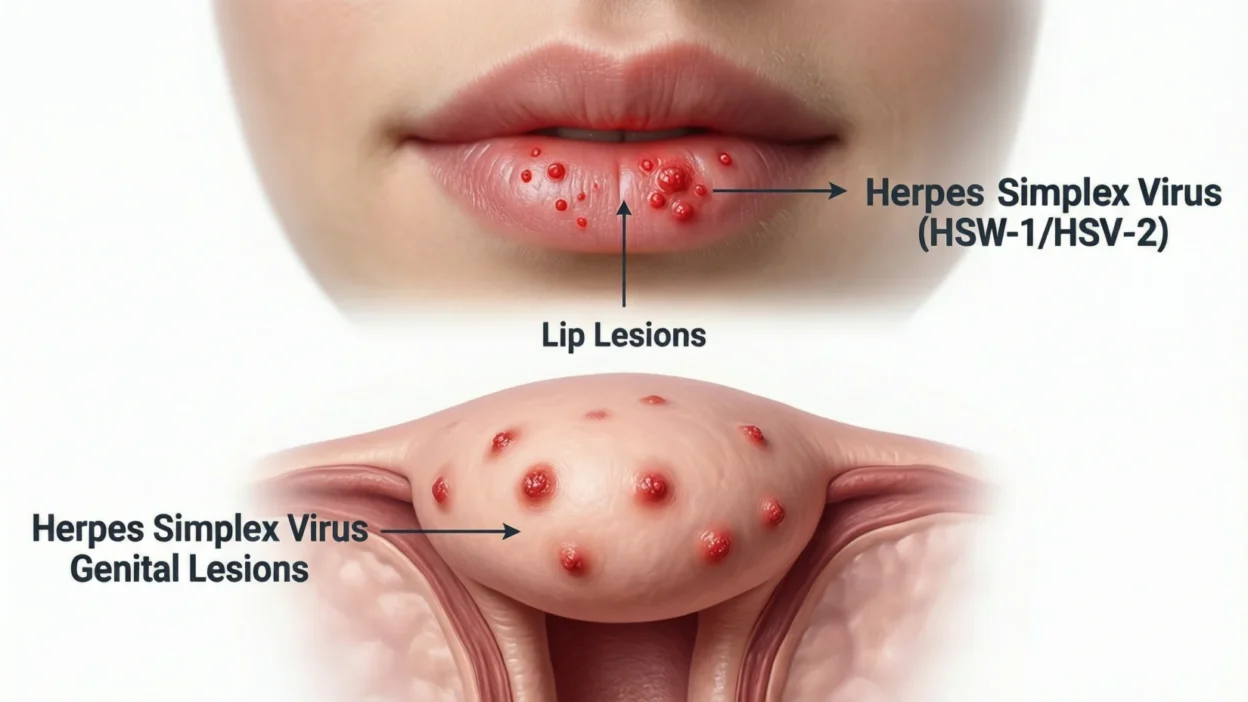
Herpes usually appears as small, fluid-filled blisters or sores on or around the mouth, genitals, or other skin areas, often accompanied by redness, itching, or mild pain.
What Herpes Looks Like in Simple Terms
Types of Herpes
There are two main types of herpes:
- HSV-1 (Oral Herpes):
- Usually affects the lips or mouth
- Causes cold sores or fever blisters
- Blisters may crust over after a few days
- HSV-2 (Genital Herpes):
- Usually affects the genital or anal area
- Blisters or sores may appear in clusters
- Can be painful or itchy
Common Visual Signs
- Small red bumps that develop into blisters
- Fluid-filled blisters that are clear or yellowish
- Crusting or scabbing as blisters heal
- Red, irritated skin around the area
Why People Get Herpes
Herpes is caused by the herpes simplex virus (HSV), which spreads through:
- Kissing or oral contact (HSV-1)
- Sexual contact (HSV-2)
- Rarely, from touching infected skin
Short Example Description
Bold summary:
Herpes appears as red bumps or fluid-filled blisters that can crust over, usually around the mouth or genitals.
Where Herpes Commonly Appears
Herpes sores can appear in different areas depending on the type:
| Type | Common Location | Tone / Context |
|---|---|---|
| HSV-1 | Lips, mouth, face | Often mild, may recur during stress |
| HSV-2 | Genitals, anus, inner thighs | Can be more painful, recurs intermittently |
| Both | Fingers, eyes, other skin areas | Rare, usually after contact with infected fluid |
Tone
- Medical / factual in healthcare contexts
- Casual / worried in online forums and personal chats
- Informal / educational in social media discussions
Realistic Conversation Examples (Texting or Forum Style)
- “hey, i think i have a cold sore smh, it looks like tiny blisters on my lip”
- “saw some bumps down there… could it be herpes??”
- “idk why my mouth is all red and crusty, anyone else had this?”
- “my doctor said it’s HSV-1, just gotta let it heal”
- “don’t panic, herpes blisters usually go away in a week or so”
- “sos my lips hurt and have small fluid blisters”
- “noticed clusters of bumps on my inner thigh, gonna call a doctor”
When to See a Doctor
Knowing what herpes looks like is useful, but professional evaluation is important:
✅ When to check
- Painful or recurring blisters
- Sores that don’t heal in 1–2 weeks
- Fever, body aches, or swollen lymph nodes
- Uncertainty about the cause
❌ When not urgent
- Minor, one-time irritation
- Blisters that are clearly caused by other known factors (like shaving)
Quick Comparison Table
| Situation | Example | Why It Works / Doesn’t |
|---|---|---|
| Oral cold sore | Small lip blisters | Common HSV-1 symptom |
| Genital cluster | Red, itchy sores | Likely HSV-2, needs medical check |
| Pimple or ingrown hair | Single bump, no fluid | Not herpes |
| Scratch / irritation | Red but no fluid | Not herpes |
Similar Skin Conditions That Can Be Confused with Herpes
| Condition | How It Looks | When to Use / Note |
|---|---|---|
| Cold sores | Small blisters on lips | Usually HSV-1 |
| Shingles | Painful rash, single side | Reactivation of varicella virus |
| Pimples / acne | Red bumps, may have white head | Not viral |
| Insect bites | Small red bumps | Itchy but not HSV |
| Canker sores | Mouth ulcers, not blisters | Usually inside mouth |
Understanding these helps avoid confusion and unnecessary stress.
FAQs About Herpes
1. What does herpes look like at first?
Small red bumps that develop into fluid-filled blisters.
2. Can herpes appear without blisters?
Yes, some people have mild or invisible outbreaks.
3. How long do herpes blisters last?
Usually 7–10 days for oral or genital sores to heal.
4. Is herpes always painful?
Not always. It can be itchy, tingly, or mildly uncomfortable.
5. Can you get herpes from kissing?
Yes, HSV-1 spreads through oral contact.
6. Does herpes go away?
No cure exists, but antiviral medication and time help manage outbreaks.
7. Can it spread even if there are no sores?
Yes, asymptomatic shedding can still transmit the virus.
Final Thought
Herpes is common and often misunderstood. Recognizing what it looks like helps with early care, reducing anxiety, and preventing accidental spread.
Remember, red bumps or fluid-filled blisters on the mouth or genitals could indicate herpes, but only a healthcare professional can confirm. Understanding the signs empowers you to respond safely and responsibly in everyday life.