Introduction
The first time I heard about magnesium, it was in a casual conversation where someone said, “take magnesium, it helps with everything.”
That got me curious. Everything? Then I started seeing it everywhere—on supplement bottles, health videos, and late-night posts about sleep, stress, and muscle cramps.
I realized a lot of people talk about magnesium, but not many explain what magnesium actually does for the body in a simple way.
If you’ve ever wondered why this mineral matters so much, you’re in the right place.
Quick Answer
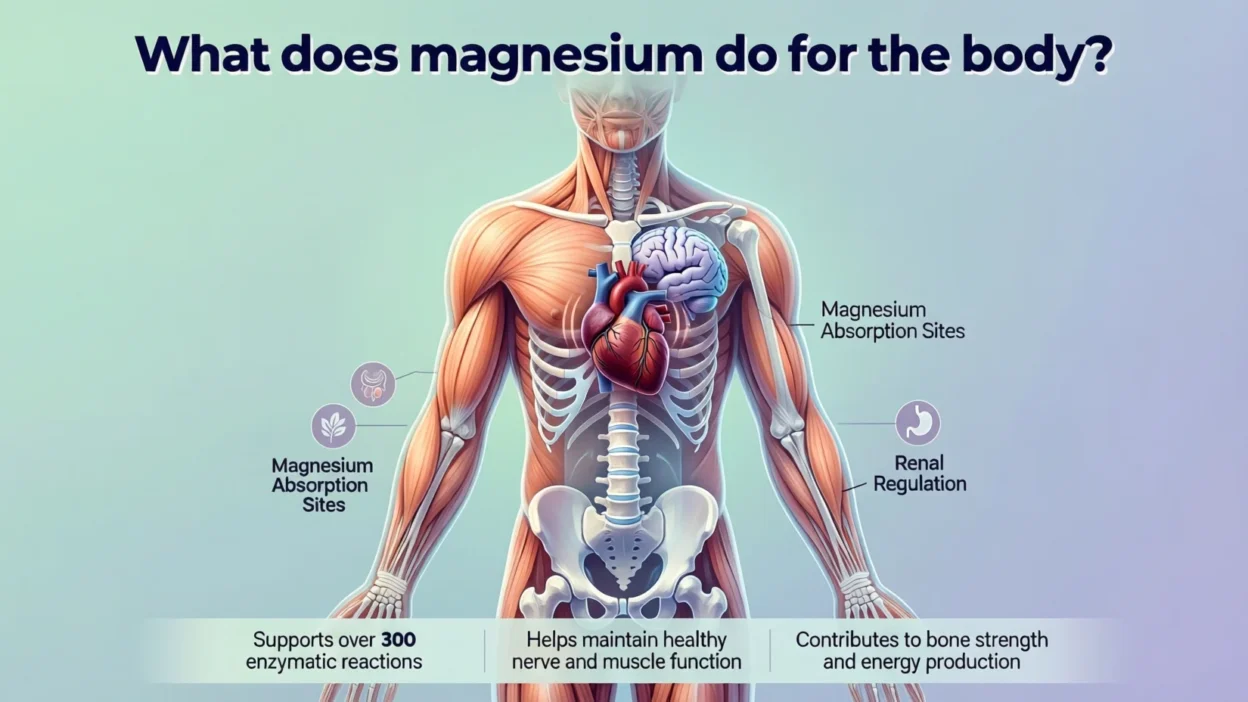
Magnesium helps your body make energy, support muscles and nerves, keep your heart steady, and maintain strong bones.
What Does Magnesium Do for the Body?
Magnesium is an essential mineral, which means your body needs it to work properly, but cannot make it on its own.
Plain-English Explanation
Magnesium helps your body:
- turn food into energy
- keep muscles relaxed
- send nerve signals
- support a healthy heartbeat
- strengthen bones and teeth
It plays a role in hundreds of chemical reactions inside your body.
Why the Body Needs Magnesium
Without enough magnesium, your body can feel off—tired, tense, or unbalanced. That’s why this mineral is so important for daily health.
Simple Example
- after adding magnesium-rich foods, my muscle cramps improved
Bold summary: Magnesium supports energy, muscles, nerves, heart health, and bones, helping your body function smoothly every day.
How Magnesium Helps Different Parts of the Body
Magnesium works quietly in many systems at once.
Muscles and Movement
- helps muscles contract and relax
- may reduce cramps and tightness
- supports exercise recovery
Nerves and Brain
- helps nerves send messages
- supports calm mood and focus
- plays a role in stress response
Heart Health
- helps keep a steady heartbeat
- supports healthy blood pressure
- works with calcium and potassium
Bones and Teeth
- helps absorb calcium
- supports bone strength
- important for long-term bone health
Signs Your Body May Need More Magnesium
Low magnesium can show up in small ways.
Common Signs
- muscle cramps or twitching
- low energy or fatigue
- trouble sleeping
- headaches
- feeling anxious or tense
These signs don’t always mean low magnesium, but they can be clues.
Where Do People Get Magnesium From?
Magnesium comes from both food and supplements.
Magnesium-Rich Foods
- leafy green vegetables
- nuts and seeds
- whole grains
- beans and lentils
- bananas
- dark chocolate
Many people don’t realize food alone can provide a lot of magnesium.
Magnesium in Daily Life: Realistic Examples
Here’s how people often talk about magnesium online or in conversation:
- magnesium helped my sleep feel deeper
- my leg cramps stopped after more magnesium
- taking magnesium for stress lately
- magnesium before bed works for me
- didn’t realize how important magnesium was
- started eating more magnesium-rich foods
- magnesium helps my muscles relax
These examples reflect how magnesium fits into everyday health routines.
When Magnesium Helps (and When It Might Not)
✅ When Magnesium Is Helpful
- muscle cramps or soreness
- low energy or fatigue
- trouble relaxing or sleeping
- supporting overall wellness
❌ When Magnesium May Not Be Enough
- severe medical symptoms
- ongoing pain or fatigue
- serious heart or nerve issues
Magnesium supports health, but it’s not a cure-all.
Comparison Table
| Situation | Magnesium’s Role | Why It Helps or Doesn’t |
|---|---|---|
| muscle cramps | supports relaxation | helpful |
| low energy | helps energy production | helpful |
| poor diet | replaces missing mineral | helpful |
| serious illness | limited effect | needs medical care |
Is Magnesium Safe for the Body?
For most people, magnesium from food is very safe.
Supplements are also commonly used, but taking too much can cause:
- stomach upset
- diarrhea
That’s why balance matters.
Magnesium and Sleep: Why People Talk About It
Magnesium helps calm the nervous system.
That’s why many people associate it with:
- better sleep quality
- relaxation before bed
- reduced nighttime muscle tension
This connection made magnesium popular in wellness discussions.
Similar Nutrients Often Compared to Magnesium
Magnesium is often mentioned alongside other minerals.
| Nutrient | What It Does | How It’s Different |
|---|---|---|
| calcium | bone strength | works with magnesium |
| potassium | muscle & heart function | balances fluids |
| iron | oxygen transport | energy focus |
| zinc | immune support | healing and growth |
Each mineral has its own role, but magnesium connects many systems.
FAQs About What Does Magnesium Do for the Body
1. What does magnesium do for the body daily?
It supports energy, muscles, nerves, heart rhythm, and bones.
2. Is magnesium important for everyone?
Yes, it’s an essential mineral needed by all ages.
3. Can magnesium help with muscle cramps?
Yes, it helps muscles relax and function properly.
4. Does magnesium affect sleep?
Yes, it can support calmness and better sleep quality.
5. Can you get magnesium from food alone?
Many people can, especially with a balanced diet.
6. Is magnesium the same as a vitamin?
No, it’s a mineral, not a vitamin.
7. What happens if you don’t get enough magnesium?
You may feel tired, tense, or experience muscle issues.
Final Thought
So, what does magnesium do for the body? It quietly supports many of the most important systems—energy, muscles, nerves, heart rhythm, and bones.
While it doesn’t get as much attention as some nutrients, magnesium plays a key role in keeping your body balanced and functioning smoothly.
Understanding its benefits helps you make smarter choices for everyday health.