Introduction
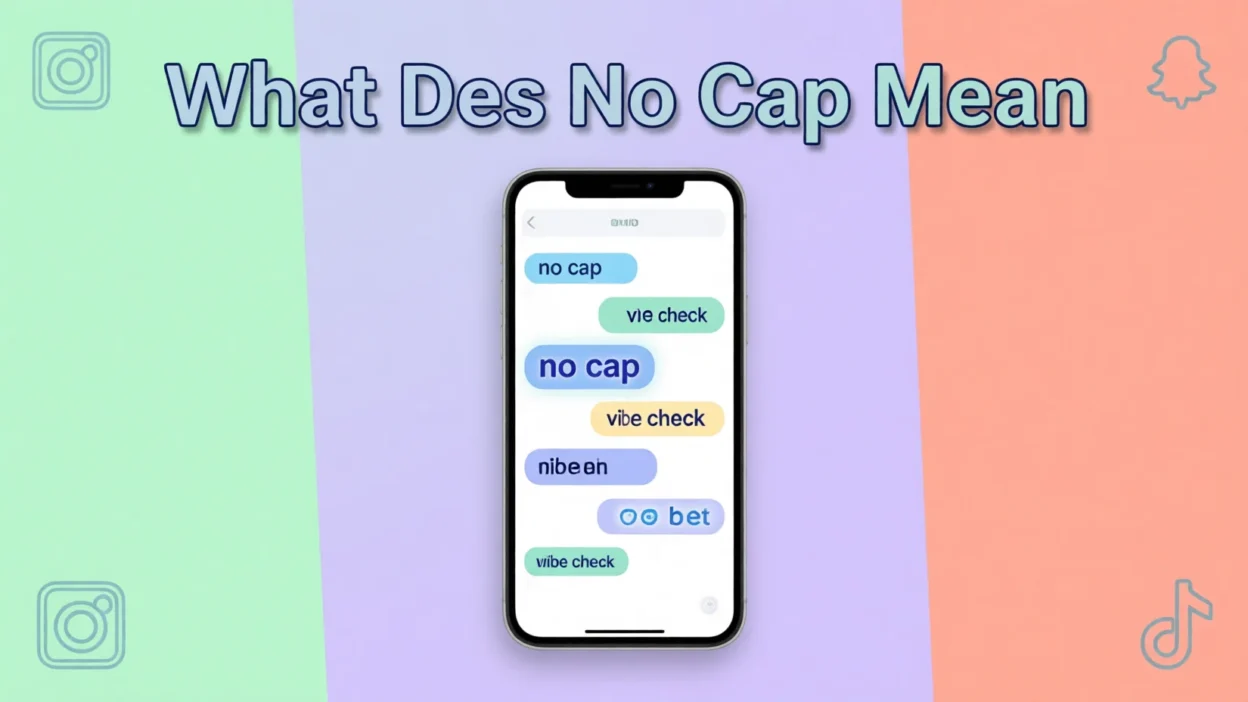
You’re scrolling through TikTok, reading comments on Instagram, or chatting with friends, and suddenly someone says “no cap.” At first, it might sound confusing — are they talking about a hat?
A game? Or something else completely? Social media slang moves fast, and phrases like this pop up everywhere in memes, texts, and online conversations.
That’s why so many people search what does no cap mean — they want to understand the real message behind it.
In this article, you’ll learn the meaning of no cap, where it came from, how to use it correctly, examples in real conversations, and when you should avoid using it.
Quick Answer: No cap means “no lie,” “for real,” or “I’m being completely honest.” People use it to show they’re telling the truth or being serious.
What Does No Cap Mean? Full Explanation
No cap is a slang phrase used mainly online and in texting to emphasize honesty. When someone says it, they’re basically saying, “I’m not exaggerating,” or “I’m telling the truth.”
The word cap in slang means a lie or exaggeration. So when you add no, it means there is no lie involved.
Simple Meaning
- No cap = No lie / Seriously / For real
Why People Use It
- To sound confident and honest
- To make statements stronger
- To emphasize that something is true
- To add a casual, social-media vibe
Example Sentences
- “That movie was amazing, no cap.”
- “I studied all night, no cap.”
- “This is the best food I’ve ever had, no cap.”
Bold Summary: No cap means you are being honest and not exaggerating — basically saying ‘for real’ or ‘no lie.’
Where Did No Cap Come From?
The phrase became popular through hip-hop culture and online communities before spreading to mainstream social media. Rappers used it in lyrics to emphasize truthfulness and authenticity. Over time, platforms like TikTok, Instagram, and Twitter helped it go viral among younger audiences.
Timeline
- Early use in African American Vernacular English (AAVE)
- Popularized in rap music
- Spread through memes and social media
- Became everyday texting slang
Today, it’s one of the most widely used casual slang phrases online.
Where Is No Cap Commonly Used?
Social Media Platforms
- TikTok videos and comments
- Instagram captions
- Snapchat and WhatsApp chats
- Twitter/X posts
- YouTube comments
Tone and Style
- Casual and informal
- Friendly and expressive
- Mostly used by younger audiences
You usually won’t see no cap in formal emails, professional documents, or academic writing.
Realistic Lowercase Texting Conversation Examples
Here’s how people use no cap naturally in everyday texting:
- “this burger is the best thing i’ve eaten, no cap”
- “i finished the whole series in one night, no cap”
- “that exam was impossible, no cap”
- “you look amazing today, no cap”
- “i’m tired after work, no cap”
- “that game is so addictive, no cap”
- “i didn’t even study and still passed, no cap”
- “this phone battery lasts forever, no cap”
- “that song is stuck in my head, no cap”
These examples show how the phrase is used casually to emphasize truth.
When To Use and When Not To Use No Cap
✅ Do Use No Cap When:
- Talking casually with friends
- Posting on social media
- Emphasizing honesty or seriousness
- Sharing opinions or experiences
- Writing informal texts or captions
❌ Don’t Use No Cap When:
- Writing formal emails or work messages
- Talking to teachers or in professional settings
- Creating official documents
- Speaking in serious business meetings
- Communicating with people who might not understand slang
Quick Comparison Table
| Context | Example Phrase | Why It Works or Not |
|---|---|---|
| Casual chat | “this pizza is amazing, no cap” | Works because it’s informal |
| Social media | “best concert ever, no cap” | Works for online slang culture |
| School essay | “the experiment was cool, no cap” | Not appropriate in academic writing |
| Job interview | “i’m hardworking, no cap” | Too informal for professional settings |
Similar Slang Words and Phrases
Here are other slang expressions with similar meanings:
- For real – Used to emphasize honesty
- No lie – Directly states truthfulness
- FR – Short for “for real”
- Deadass – Slang meaning “seriously”
- On God – Used to emphasize truth (informal and cultural)
Each phrase has a similar vibe but may vary depending on region or community.
Why Is No Cap So Popular?
Slang spreads quickly because people want short, expressive ways to communicate feelings and opinions. No cap is popular because it:
- Sounds cool and modern
- Is easy to type and remember
- Adds personality to messages
- Shows confidence and authenticity
- Fits perfectly with meme culture
Social media trends and influencer content have played a big role in making it mainstream.
Common Mistakes People Make With No Cap
Even though it’s simple, people sometimes misuse the phrase.
Mistakes To Avoid
- Using it in serious or professional writing
- Overusing it in every sentence
- Using it with people who don’t understand slang
- Thinking it has anything to do with actual hats or caps
- Mixing it up with unrelated internet abbreviations
Keeping these in mind helps you sound natural and not forced.
FAQs About What Does No Cap Mean
1. What does no cap mean in texting?
It means “no lie” or “I’m being honest.” People use it to emphasize truth.
2. What does cap mean by itself?
Cap means a lie or exaggeration. Saying “that’s cap” means something is not true.
3. Is no cap rude or offensive?
No, it’s just casual slang, but it may sound unprofessional in formal situations.
4. Can adults use no cap?
Yes, anyone can use it, but it’s more common among younger audiences.
5. Is no cap still popular in 2026?
Yes, it’s still widely used on social media and in everyday texting.
6. Can I use no cap in school or work?
Only in casual conversations. Avoid using it in formal assignments or professional communication.
7. What is the opposite of no cap?
Just “cap,” which means a lie or exaggeration.
Final Thoughts
No cap is a popular slang phrase that simply means “no lie” or “for real.” It’s used to emphasize honesty and make statements sound more genuine in casual conversations and online posts.
While it’s perfect for texting friends or posting on social media, it’s best avoided in professional or formal situations. Understanding phrases like this helps you stay connected with modern online culture and communicate more naturally.