Introduction
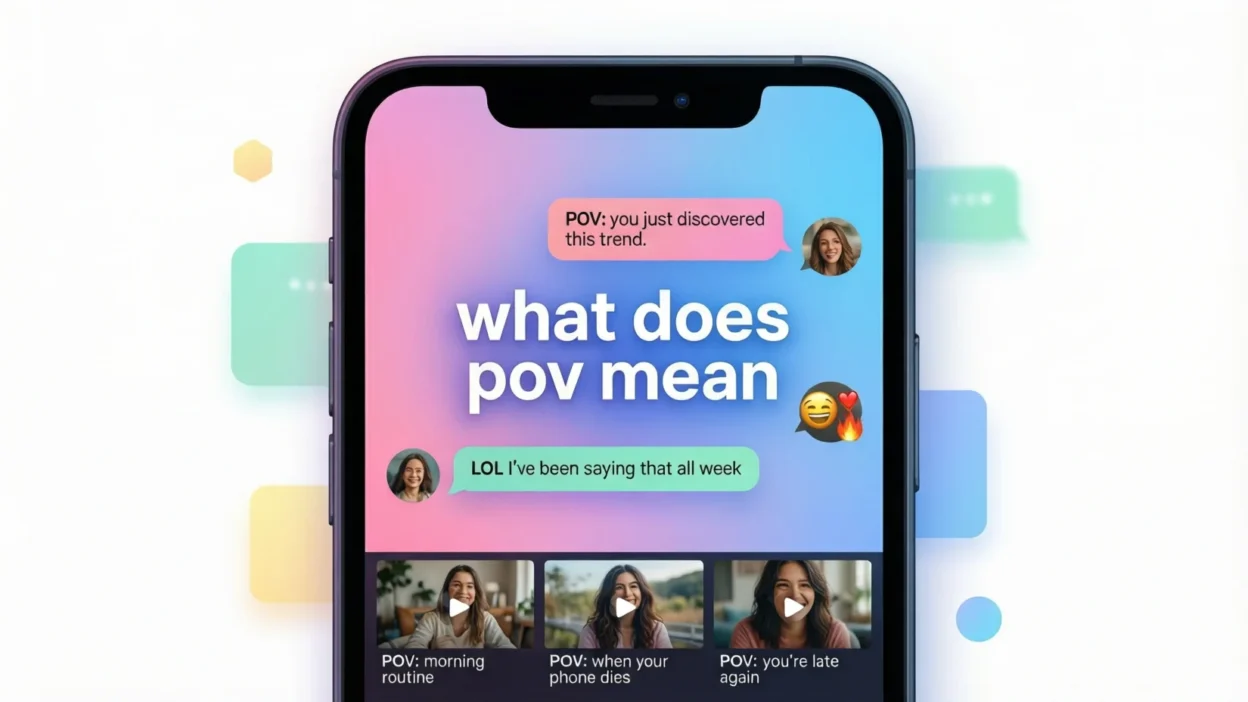
The first time I saw “pov” online, it was under a random video on social media. The clip showed someone dropping their phone, and the caption said: “pov: you check your phone at 3am.”
I remember pausing and thinking, wait… what does pov mean? I’d seen it in comments, texts, memes, and even gaming chats. Everyone else seemed to get it, but I felt one step behind.
If you’ve ever felt the same way, don’t worry—you’re not alone. Let’s break it down in the easiest way possible.
Quick Answer
POV means “point of view,” and it’s used online to show a situation from someone’s personal perspective.
What Does POV Mean in Text and Online Chats?
POV stands for Point of View.
In simple terms, it means seeing or experiencing something from a specific person’s perspective.
In texting and social media slang, people use POV to set a scene. It helps the reader or viewer imagine themselves in a situation, almost like they’re living it.
Why People Use POV
- It makes content feel personal and relatable
- It quickly explains the angle or situation
- It grabs attention without long explanations
Simple Example
- pov: you open the fridge for the fifth time hoping new food appears
Bold summary: POV means “point of view” and is used online to show a moment from someone’s personal perspective.
Where Is POV Commonly Used?
You’ll see POV almost everywhere in modern digital communication. It’s especially popular in casual and informal spaces.
Common Places You’ll See POV
- Text messages between friends
- Social media platforms like TikTok, Instagram, and X
- Video captions and reels
- Comments and replies
- DMs (direct messages)
- Gaming chats
- Online forums and meme pages
Tone of POV
- Casual: yes
- Informal: very common
- Neutral: sometimes
- Formal: ❌ not recommended
POV is part of texting culture and social media slang, so it’s best used where relaxed language feels natural.
POV Conversation Examples (Realistic Text Style)
Here are some natural, modern examples written the way people actually type online:
- pov: you said “one more episode” and now it’s 4am
- pov you open your camera by accident in class
- pov: the food arrives and everyone suddenly stops talking
- pov you check your bank balance after shopping
- pov: you hear your name in a conversation across the room
- pov you finally reply after saying “i’ll text later”
- pov: the wifi disconnects during an online game
- pov you reread a message before sending it
These examples show how pov helps set a quick mental picture.
When to Use POV (and When Not to)
Using POV correctly makes your message clearer and funnier. Using it wrong can confuse people.
✅ When to Use POV
- When sharing a relatable moment
- When posting memes or short videos
- When you want others to imagine your situation
- In casual chats with friends
❌ When Not to Use POV
- In formal emails or work messages
- In professional writing or school essays
- When the situation isn’t clear
- If the audience doesn’t understand internet slang
POV Usage Comparison Table
| Context | Example Phrase | Why It Works / Doesn’t |
|---|---|---|
| social media | pov: you forgot your headphones | relatable and casual |
| texting | pov you see their name pop up | clear and emotional |
| work email | pov: i missed the meeting | too informal |
| school essay | pov of the character | use full phrase instead |
Similar Slang Words and Alternatives to POV
Sometimes POV isn’t the best fit. Here are some alternatives and when to use them.
| Term | Meaning | When to Use It |
|---|---|---|
| from my side | personal opinion | casual conversation |
| imagine this | sets a scene | storytelling |
| me when | meme-style reaction | social media humor |
| relatable moment | shared experience | captions or posts |
| in my experience | personal story | neutral or semi-formal |
| this feeling when | emotional moment | casual posts |
Each option fits a slightly different tone, but POV remains the fastest way to show perspective in online chats.
Why POV Is So Popular in Texting Culture
The rise of short videos and memes made POV explode in popularity. People want fast, emotional content that feels real.
POV works because it:
- Saves time
- Feels personal
- Connects emotionally
- Fits short-form content
It turns a simple moment into something everyone can relate to.
Common Mistakes People Make With POV
Even though it’s simple, POV is often used incorrectly.
Mistake 1: Using It Backward
Some people describe someone else’s view while saying POV.
Correct POV usually puts the viewer in the scene.
Mistake 2: Overusing It
Not every post needs POV. Too much can feel forced.
Mistake 3: Using It Formally
POV belongs to informal chat, not professional writing.
FAQs About What Does POV Mean
1. What does POV mean in texting?
It means point of view, used to show a situation from someone’s personal perspective.
2. Is POV only used on social media?
No, it’s also common in texts, DMs, gaming chats, and comments.
3. Is POV slang or a real term?
Both. It’s a real term, but online it’s used as social media slang.
4. Can adults use POV or is it just for teens?
Anyone can use it, but it’s most common among teens and young adults.
5. Is POV informal or formal?
It’s informal and best for casual conversations.
6. Can POV be used in writing or stories?
Yes, but usually written fully as “point of view” in formal writing.
7. Why do people say POV instead of explaining?
Because it’s short, trendy, and easy to understand in texting culture.
Final Thought
So, what does POV mean? It’s a simple way to say “this is my point of view” or “imagine you’re in this situation.”
In modern digital communication, POV helps people share moments quickly, emotionally, and creatively.
As long as you use it in casual settings and keep the context clear, it’s a powerful little phrase that fits perfectly into today’s online world.