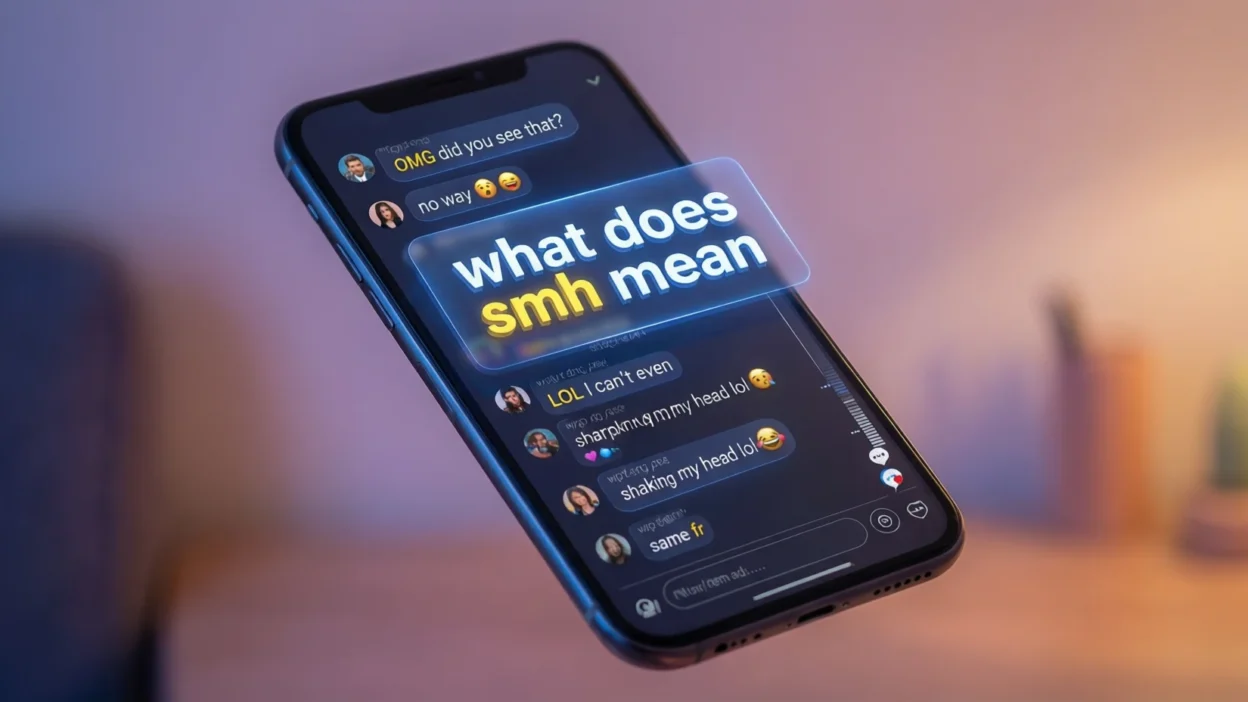
The first time you see “smh”, it usually pops up in a confusing way. Maybe someone replies to your message with just three letters: smh. No emoji. No explanation.
You stare at the screen, wondering if they’re annoyed, joking, or disappointed. Then you start noticing it everywhere—Twitter replies, TikTok comments, group chats, even gaming chats.
Everyone seems to understand it instantly. If you’ve ever paused mid-scroll thinking, “wait… what does smh mean?”—you’re definitely not alone.
Internet slang moves fast, and smh is one of those expressions that says a lot without saying much.
Quick Answer
SMH means “shaking my head,” and it’s used to show disappointment, disbelief, or mild frustration in text and online chats.
What Does SMH Mean in Text and Online?
Full form of SMH
SMH = Shaking My Head
It’s a texting abbreviation, not a spoken word.
Plain-English meaning
When someone types smh, they’re reacting to something that feels:
- disappointing
- annoying
- unbelievable
- foolish
- embarrassing
It’s like silently shaking your head instead of arguing or explaining.
Why do people use smh?
People use smh because:
- it’s quick and effortless
- it shows emotion without being rude
- it avoids long explanations
- it fits perfectly in informal chat
- it works as a reaction on social media
SMH is especially popular in texting culture where short responses matter.
Short example sentence
Bold summary:
SMH means “shaking my head,” used to express disappointment, disbelief, or frustration in casual online communication.
Where Is SMH Commonly Used?
SMH is extremely common across digital platforms.
You’ll see it in:
- Text messages
- WhatsApp and Messenger chats
- Twitter/X replies
- TikTok comments
- Instagram DMs
- Discord and gaming chats
- Online forums
Tone and formality
- Tone: casual, slightly judgmental, sometimes playful
- Formality: informal
- Emotion level: mild, not aggressive
SMH is rarely used in professional or formal communication.
Realistic Conversation Examples
Here’s how smh actually appears in real chats (lowercase, natural style):
- “you really ate my fries smh”
- “he showed up late again smh”
- “that take is wild smh”
- “smh i told you this would happen”
- “you didn’t save the file?? smh”
- “bro read the instructions smh”
- “smh some people never learn”
- “that comment section… smh”
SMH often stands alone or ends a sentence for extra emphasis.
When to Use and When NOT to Use SMH
SMH works well in everyday digital conversations—but not everywhere.
✅ When to use smh
- casual texting with friends
- reacting to silly mistakes
- commenting on social media
- playful criticism
- light frustration
❌ When not to use smh
- work emails
- talking to a boss or teacher
- serious emotional conversations
- formal writing or assignments
Comparison table
| Context | Example Phrase | Why It Works / Doesn’t |
|---|---|---|
| Group chat | “you forgot again smh” | casual and relatable |
| Twitter reply | “this take is awful smh” | fits platform tone |
| Work email | “the report is late smh” | sounds unprofessional |
| Serious talk | “i’m really hurt smh” | can seem dismissive |
Similar Slang Words and Alternatives
If you want variety, here are slang alternatives close to smh:
| Slang | Meaning | When to Use |
|---|---|---|
| facepalm | embarrassment or disbelief | obvious mistakes |
| bruh | disappointment or shock | casual reactions |
| wow | sarcastic surprise | ironic situations |
| yikes | awkward or bad moment | uncomfortable content |
| fr | expressing agreement or disbelief | modern texting |
| lol | softens frustration | playful tone |
Each of these fits into informal chat and online slang meaning, just like smh.
Common Misunderstandings About SMH
- It’s not always angry — often it’s light or humorous
- It’s not rude by default — tone depends on context
- It doesn’t mean silence — it’s a reaction, not avoidance
Understanding tone is key in texting culture.
FAQs About SMH
1. What does smh mean in texting?
SMH means “shaking my head,” showing disappointment or disbelief.
2. Is smh negative or positive?
Mostly neutral to mildly negative, sometimes playful.
3. Can smh be used jokingly?
Yes, it’s often used humorously with friends.
4. Who uses smh the most?
Teens, young adults, and active social media users.
5. Is smh rude?
Not usually, but it can sound dismissive in serious situations.
6. Can I use smh in school or work?
It’s best avoided in formal or professional communication.
Final Thought
SMH is one of those internet expressions that packs a lot of meaning into just three letters. Whether it’s disappointment, disbelief, or playful frustration, it lets people react quickly without overexplaining.
As long as you keep it in casual, informal chats, smh is a perfectly normal part of modern digital communication—and now, you’ll know exactly what someone means when they send it.