Have you ever been chatting with a friend, scrolling through your phone, or reading an article online and came across the abbreviation “SMS”?
Maybe someone said, “I’ll send you an SMS,” and you thought, wait, isn’t that just a text?
With so many acronyms floating around in texting and online communication, it’s easy to get confused.
Whether you’re texting, emailing, or browsing social media, knowing what SMS means helps you understand digital conversations clearly. This guide will break it down in simple, easy-to-understand language for anyone.
Quick Answer
SMS stands for “Short Message Service” and refers to standard text messages sent between mobile phones.
What Does SMS Mean in Text
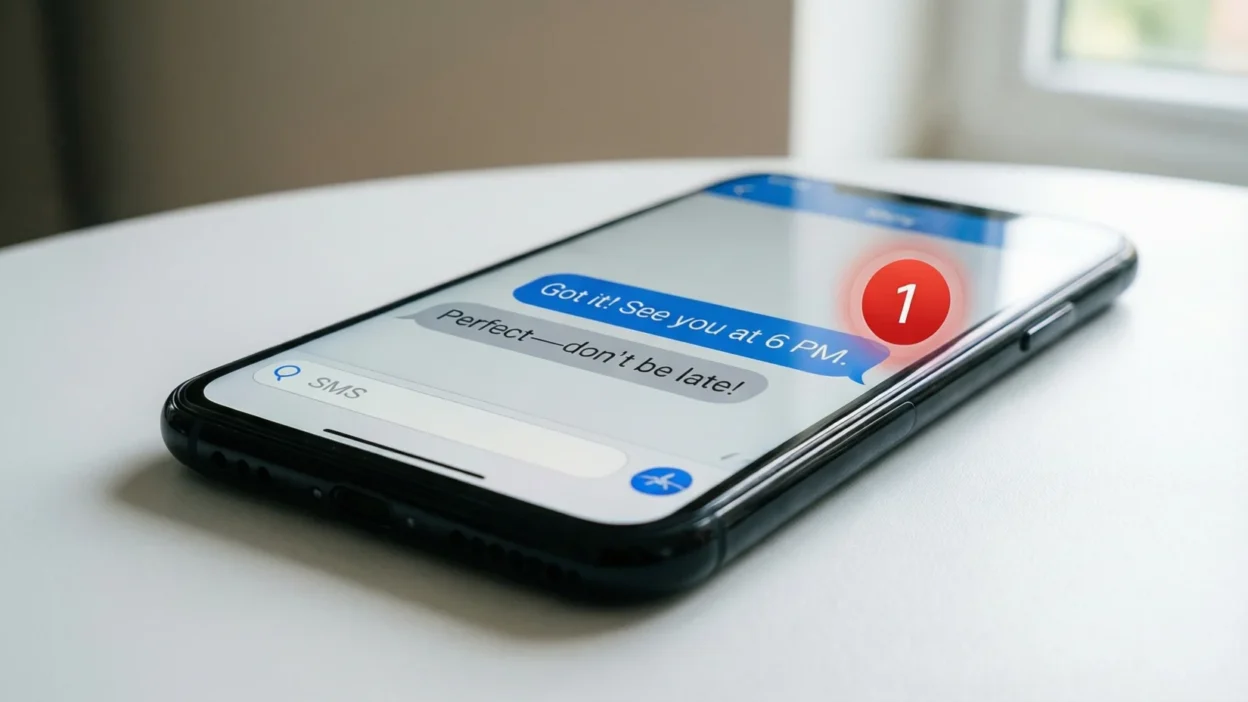
SMS is a technology standard that allows people to send short text messages from one phone to another. Unlike modern instant messaging apps like WhatsApp or iMessage, SMS works on any mobile network without needing internet access.
In simple terms, SMS is the formal term for what most people call a text message. You can use it to send alerts, confirmations, reminders, or casual messages.
Example:
- “I sent you an SMS with the appointment details.”
Summary: SMS = standard text message sent via mobile networks.
Where SMS Is Commonly Used
SMS appears in both casual and professional contexts:
- Texting / Messaging: Sending messages to friends, family, or colleagues.
- Business & Notifications: Banks, apps, and services send SMS alerts or OTPs (One-Time Passwords).
- Healthcare & Appointments: Clinics often confirm appointments via SMS.
- Marketing & Promotions: Companies send special offers or updates through SMS campaigns.
Tone: SMS can be casual, neutral, or formal, depending on the context. Personal chats are informal, while alerts and notifications are professional.
7 Realistic Conversation Examples
Here’s how SMS might appear in everyday conversations:
- “i’ll send you an SMS with the address”
- “did you get my SMS about the meeting?”
- “SMS me when you’re on your way”
- “bank sent me an SMS for verification”
- “got an SMS from the clinic confirming my appointment”
- “why are you still using SMS instead of WhatsApp lol”
- “i prefer SMS for official notifications”
These examples show how SMS is versatile, used for both casual and formal communication.
When to Use and When Not to Use SMS
Do:
- Use SMS for quick messages when internet isn’t available.
- Use it for formal notifications or confirmations.
- Combine SMS with casual texts for friends if preferred.
Don’t:
- Use SMS for long-form conversations—it’s best for short messages.
- Send spammy or irrelevant messages via SMS.
- Confuse SMS with messaging apps that require internet.
Comparison Table:
| Context | Example Phrase | Works or Not? | Why |
|---|---|---|---|
| Casual chat | “i’ll SMS you the address” | Works | Clear and informal |
| Banking alert | “SMS verification sent” | Works | Professional and informative |
| Long group discussion | “let’s do everything over SMS” | Not Work | SMS isn’t ideal for extended messaging |
Similar Terms or Alternatives
| Term / Abbreviation | Meaning | When to Use |
|---|---|---|
| Text | General term for any SMS or message | Casual conversation |
| MMS | Multimedia Messaging Service (photos, videos) | When sending images or videos via mobile |
| iMessage | Apple’s messaging app for texts | For iOS users with internet |
| WhatsApp / Telegram | Internet-based messaging apps | When SMS is not required |
| Electronic messages via internet | For longer or formal communication |
SMS is unique because it works without internet, making it reliable and universal across devices.
FAQs About SMS
1. Is SMS the same as a text message?
Yes, SMS is the technical term for a standard text message sent via mobile networks.
2. Does SMS require internet?
No, SMS works over cellular networks, not Wi-Fi or mobile data.
3. Can I send images via SMS?
No, for images or videos you need MMS or a messaging app.
4. Is SMS formal or informal?
It can be both. Personal chats are informal, while notifications or alerts are formal.
5. Can I use SMS internationally?
Yes, but international SMS may incur additional charges depending on your carrier.
6. How long can an SMS be?
Standard SMS is limited to 160 characters per message. Longer texts may be split.
7. Is SMS still relevant with messaging apps?
Absolutely! SMS is still widely used for official alerts, banking, and situations without internet.
Final Thought
Understanding what SMS means helps you navigate both casual and professional digital communication.
From texting friends to receiving banking alerts or appointment confirmations, SMS remains a reliable, internet-free messaging option.
Knowing how and when to use SMS ensures your messages are clear, timely, and appropriate for any situation.