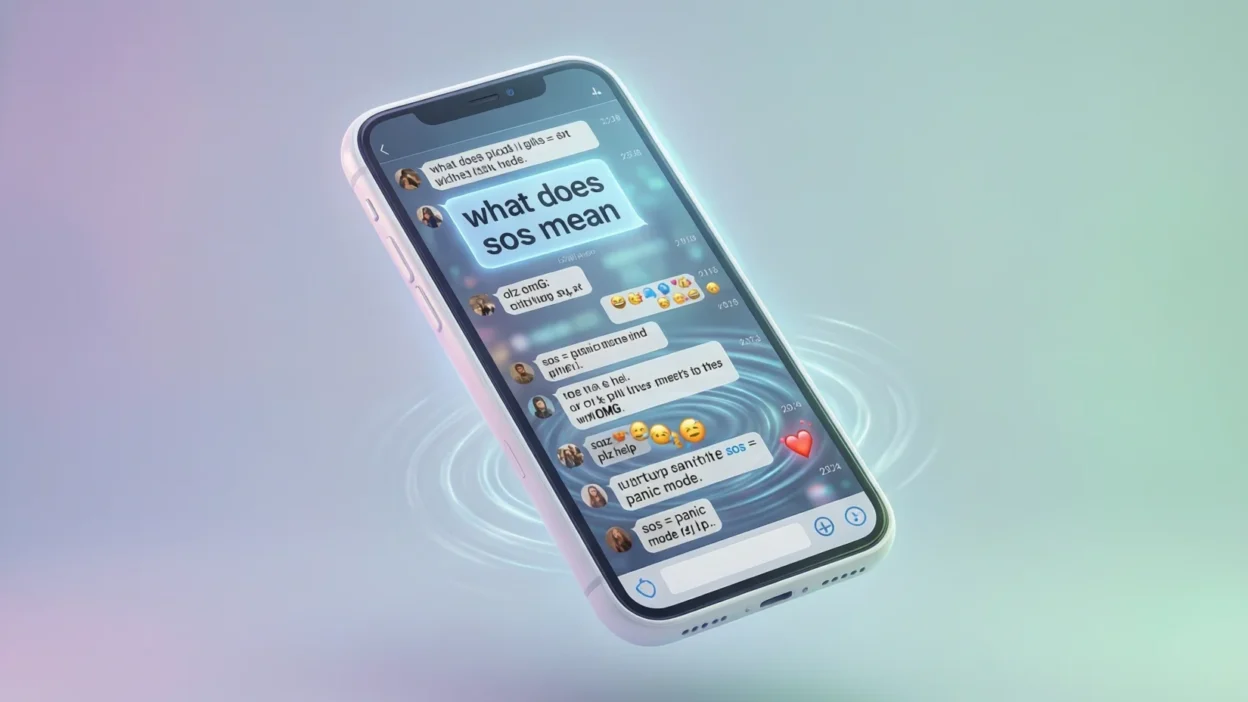
You’re in a group chat when someone suddenly types “sos pls”.
Your brain jumps straight to danger. Are they okay? Is something wrong?
Then, five minutes later, they follow up with: “i have no snacks left.”
Now you’re confused—and a little relieved.
SOS is one of those terms that feels serious, but online, it doesn’t always mean an actual emergency. It shows up in texts, memes, tweets, and comments, and the meaning can shift depending on context.
If you’ve ever wondered whether SOS is a joke, a cry for help, or something in between, you’re in the right place.
Quick Answer
SOS originally means an international distress signal asking for urgent help, but in texting it’s often used jokingly to mean “i need help right now.”
What Does SOS Mean in Text and Online?
Full form of SOS
Interestingly, SOS does not officially stand for specific words.
Many people think it means “save our souls” or “save our ship,” but those are backronyms created later.
The real reason SOS was chosen is because it’s:
- easy to send in Morse code
- simple to recognize
- hard to confuse
Plain-English meaning
In modern use, SOS has two main meanings:
- Serious meaning:
A real emergency or urgent call for help. - Casual texting meaning:
A dramatic or playful way to say “i really need help” or “this is urgent to me.”
Why do people use sos in texting?
People use sos because:
- it’s short and recognizable
- it adds urgency
- it can be dramatic or funny
- it works in memes and reactions
- everyone understands it instantly
In texting culture, SOS often means “help me”—not “i’m in danger.”
Simple example sentence
Bold summary:
SOS means a call for help—serious in emergencies, but often playful or exaggerated in casual online chats.
Where Is SOS Commonly Used?
SOS appears in both real-world emergencies and online conversations, which is why context matters.
Common places you’ll see SOS
- Text messages
- WhatsApp and Messenger chats
- Twitter/X posts
- TikTok captions and comments
- Instagram stories
- Group chats
- Online forums
Tone and formality
- Tone: urgent, dramatic, or playful
- Formality: informal online, formal in real emergencies
- Emotion: depends heavily on context
In social media slang, SOS is usually not literal.
Realistic Conversation Examples
Here’s how sos looks in real, modern chats (lowercase, natural style):
- “sos my phone is at 1%”
- “i’m stuck in traffic sos”
- “sos i don’t understand this homework”
- “anyone free rn sos”
- “sos this exam is killing me”
- “i spilled coffee on my shirt sos”
- “sos i forgot the meeting time”
- “this group chat is chaos sos”
Notice how none of these are actual emergencies—they’re everyday frustrations.
When to Use and When NOT to Use SOS
Because SOS is linked to emergencies, it’s important to use it wisely.
✅ When to use sos
- joking with friends
- expressing urgency in casual chat
- asking for quick help
- reacting to stressful situations
- memes or captions
❌ When not to use sos
- professional emails
- formal messages
- situations involving real emergencies (unless it’s serious)
- talking to someone who might panic
Comparison table
| Context | Example Phrase | Why It Works / Doesn’t |
|---|---|---|
| Group chat | “sos i’m running late” | casual and understood |
| TikTok caption | “sos finals week” | relatable humor |
| Work email | “sos the report is late” | sounds unprofessional |
| Real emergency | “sos please help” | only appropriate if serious |
The Difference Between Real SOS and Texting SOS
This distinction is important.
Real SOS
- life-threatening situations
- maritime or aviation emergencies
- disaster or danger
- requires immediate action
Texting SOS
- emotional stress
- mild panic
- joking exaggeration
- everyday problems
In online chat meaning, SOS is almost always symbolic, not literal.
Similar Slang Words and Alternatives
If SOS feels too dramatic, here are alternatives you’ll often see in texting culture:
| Slang | Meaning | When to Use |
|---|---|---|
| help | straightforward request | neutral situations |
| pls | polite urgency | casual chats |
| rip me | something went wrong | humor |
| send help | joking desperation | memes |
| i’m struggling | honest stress | serious chats |
| bruh | disbelief or stress | informal reactions |
Each fits different levels of urgency in informal chat and social media slang.
Common Misunderstandings About SOS
- SOS is not always serious online
- It doesn’t always mean danger
- Tone matters more than the word itself
- Context decides everything
Understanding this prevents panic and miscommunication.
FAQs About SOS
1. What does sos mean in texting?
In texting, sos usually means “i need help” or “this feels urgent,” often in a playful way.
2. Is sos an abbreviation?
No. It’s a signal chosen for simplicity, not a shortened phrase.
3. Is sos serious or joking?
It can be both. Online, it’s usually joking or exaggerated.
4. Can sos be used on social media?
Yes, it’s very common in captions, comments, and memes.
5. Who uses sos the most?
People of all ages, but especially students and social media users.
6. Is it okay to use sos at work?
It’s best avoided in professional communication.
7. Can sos cause misunderstandings?
Yes—if someone thinks it’s a real emergency. Always consider context.
Final Thought
SOS is one of the most recognizable signals in the world, but online, it’s taken on a lighter, more playful role. In modern digital communication, it’s often used to show urgency, stress, or humor—not real danger.
As long as you use it in casual, informal spaces and understand your audience, SOS is a simple and effective way to say, “i need help right now.”