Introduction
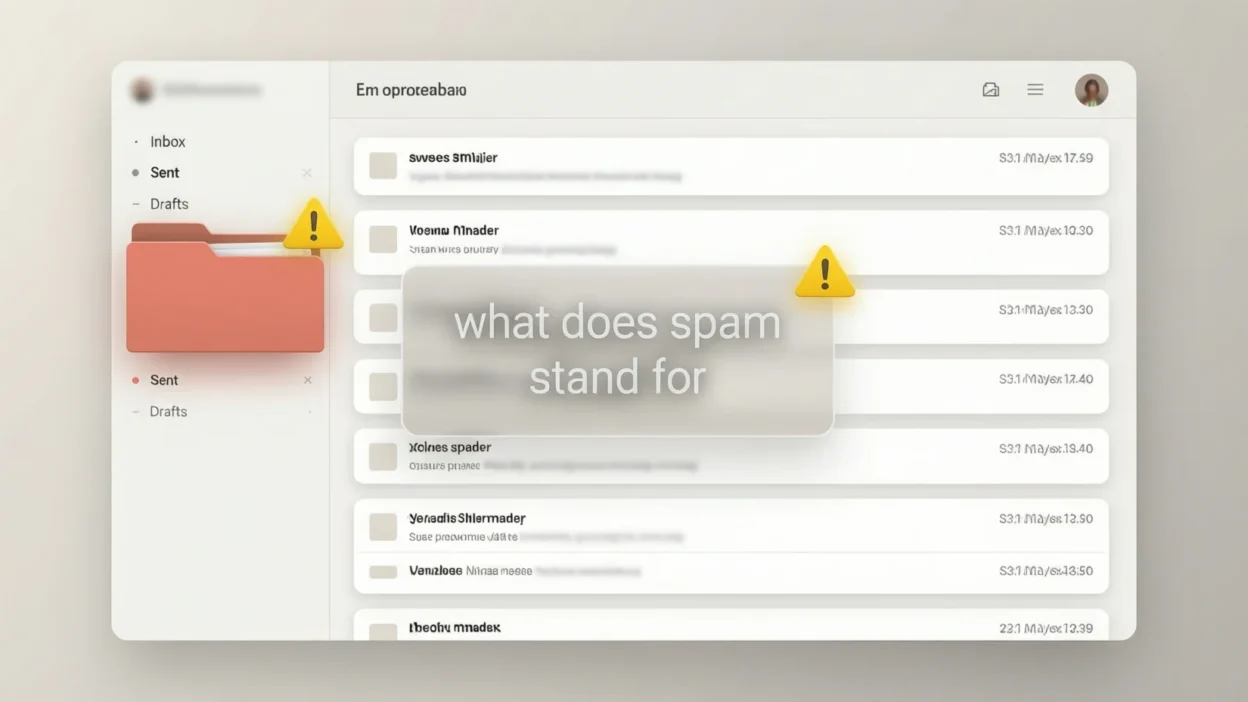
You’re checking your email, and there it is again — the spam folder. Full of weird ads, sketchy links, and messages you never asked for.
At some point, almost everyone wonders: “Wait… what does spam stand for? Is it actually an acronym?” The answer is a little surprising, a little funny, and deeply rooted in internet history.
Quick Answer:
Spam does NOT officially stand for anything. It’s not a real acronym — but many popular backronyms exist online.
What Does Spam Stand For? (Straightforward Explanation)
Let’s clear this up clearly and honestly.
The short truth
- Spam is not an acronym
- It does not officially stand for any words
The term spam was borrowed from the name of a canned meat product called SPAM, made by Hormel.
So why do people think it stands for something?
Because over time, the internet created backronyms (phrases made after the word already existed).
Common fake meanings people believe
- foolish Pointless Annoying Messages
- Sending Persistent Annoying Messages
- Stuff Posing As Mail
These are not official — just internet jokes that stuck.
Bottom line: Spam doesn’t stand for anything, but people love giving it meanings anyway.
Where Did the Word “Spam” Come From?
The origin is actually kind of legendary.
1. The canned meat (real origin)
- SPAM is a canned meat product launched in 1937
- The name itself doesn’t officially stand for anything either
2. Monty Python connection
The internet meaning comes from a famous Monty Python comedy sketch where:
- The word spam is repeated over and over
- It drowns out normal conversation
- Everything on the menu contains spam
This repetition inspired the modern meaning.
3. Early internet adoption
In the early days of the internet:
- repetitive messages flooded forums and chats
- users called this behavior spam
- the term stuck permanently
What Does Spam Mean Today?
Today, spam means:
Common forms of spam
- email spam
- text message spam
- comment spam
- social media spam
- call spam
Simple example
- I didn’t sign up for this — it’s spam.
Spam is less about content and more about intent and volume.
Examples of Spam in Real Life
Here are realistic spam examples you’ve probably seen:
- “You won a free iPhone — click now”
- random crypto investment messages
- fake job offers
- repeated comments with links
- scam prize notifications
- unsolicited marketing emails
- robocalls
- fake delivery alerts
- suspicious password reset emails
If it’s unwanted and repetitive — it’s spam.
Spam vs Scam (Important Difference)
People often confuse these two.
| Term | Meaning | Intent |
|---|---|---|
| spam | unwanted messages | annoying |
| scam | deceptive messages | harmful |
Not all spam is a scam, but most scams start as spam.
Why Is Spam Such a Big Problem?
Spam exists because:
- it’s cheap to send
- even a tiny success rate is profitable
- automation makes it easy
Major problems caused by spam
- wasted time
- security risks
- data theft
- malware exposure
- cluttered inboxes
That’s why spam filters exist.
Common Fake Full Forms of Spam (Backronyms)
Here are popular ones — none are official:
| Fake Full Form | Real or Fake |
|---|---|
| foolish Pointless Annoying Messages | fake |
| Sending Persistent Annoying Messages | fake |
| Stuff Posing As Mail | fake |
| Systematic Posting of Advertised Messages | fake |
They’re clever — just not real.
FAQs About Spam
1. what does spam stand for in email?
It doesn’t officially stand for anything — it means unwanted email.
2. is spam an acronym?
No. It’s a word borrowed from pop culture.
3. why is junk mail called spam?
Because it floods inboxes the way “spam” flooded conversation in the Monty Python sketch.
4. is spam always dangerous?
Not always — but it can be.
5. who invented the word spam online?
Early internet users adopted it in the 1980s–90s.
6. does spam only apply to email?
No — it applies to texts, calls, comments, and DMs too.
Final Thoughts
So, what does spam stand for? Technically — nothing at all. The word comes from a canned meat brand and a classic comedy sketch, not an acronym.
Over time, the internet gave it playful fake meanings, but the real definition is simple: unwanted, repetitive messages.
Once you know the history, the word spam suddenly makes a lot more sense.