The first time I heard someone ask, “what does the judicial branch do?” was in a group chat before a civics test.
One friend typed, “wait… is that the one that makes laws or checks them?” Suddenly, everyone was confused. We hear words like judicial branch, Supreme Court, and constitutional rights all the time—on the news, on social media, even in memes.
But when it comes to explaining it in simple words? That’s where things get tricky.
If you’ve ever felt unsure about what the judicial branch actually does, don’t worry. Let’s break it down in the easiest way possible.
Quick Answer
The judicial branch interprets laws and decides if they follow the Constitution.
What Does the Judicial Branch Do? Full Meaning Explained in Plain English
The judicial branch is one of the three branches of government in the United States. The other two are the legislative branch (which makes laws) and the executive branch (which enforces laws).
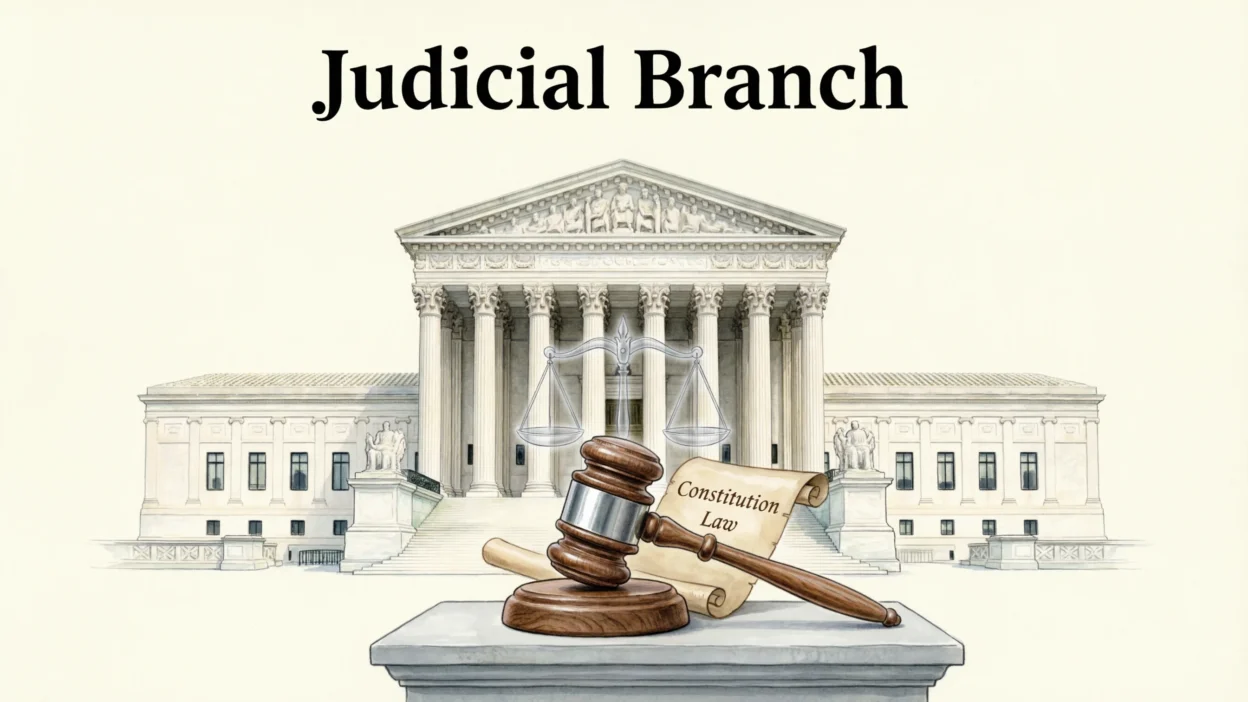
The judicial branch is led by the Supreme Court of the United States. It also includes lower federal courts.
In simple terms, the judicial branch:
- Explains what laws mean
- Decides if a law breaks the Constitution
- Settles legal disputes between people, states, or the government
Think of it like a referee in a game. If players argue about the rules, the referee steps in and makes the final call. That’s what judges do with laws.
Why Does the Judicial Branch Exist?
The Founding Fathers created three branches so no single part of the government would have too much power. This system is called checks and balances.
The judicial branch checks the other branches by reviewing their actions. If Congress passes a law that goes against the Constitution, the courts can strike it down. If the President does something unconstitutional, the courts can block it.
Short Example Sentence
- the judicial branch decided the new law was unconstitutional.
In short: the judicial branch interprets laws and makes sure they follow the Constitution.
Where Is the Judicial Branch Commonly Mentioned?
Unlike texting slang or social media abbreviations, the term judicial branch is mostly used in more formal settings. You’ll often see it in:
- School textbooks
- Government classes
- News articles
- Political discussions
- Online forums about law or civics
- Educational YouTube videos
- Debate threads on platforms like X (Twitter) or Reddit
Tone of the Term
The tone is usually:
- Formal in school and legal settings
- Neutral in news reporting
- Sometimes serious or political in social media debates
It’s not informal chat slang. You wouldn’t normally text your friend, “lol the judicial branch just ruled on my homework.” But you might mention it during a discussion about a Supreme Court decision.
9 Realistic Conversation Examples (Modern Style)
Here’s how people might naturally use it in online chats:
- “wait, what does the judicial branch do again?”
- “isn’t the judicial branch the one with the supreme court?”
- “the judicial branch can strike down laws, right?”
- “our teacher said the judicial branch checks congress.”
- “bro i always mix up legislative and judicial 😭”
- “the judicial branch said that law wasn’t constitutional.”
- “i googled what does the judicial branch do before my quiz lol”
- “so executive enforces, legislative makes, judicial interprets?”
- “lowkey the judicial branch has a lot of power”
Notice how the tone stays mostly neutral or serious—even in casual chat.
When to Use and When Not to Use the Term
✅ Use It When:
- Talking about government structure
- Discussing court cases
- Writing essays about civics
- Debating constitutional issues
- Explaining how checks and balances work
❌ Don’t Use It When:
- You just mean “court” in a small, local sense
- You’re texting casually about unrelated topics
- You want to sound informal or funny
- You’re talking about non-government organizations
Quick Comparison Table
| Context | Example Phrase | Why It Works (or Doesn’t) |
|---|---|---|
| School essay | “the judicial branch interprets laws.” | ✅ Correct and formal |
| News article | “the judicial branch ruled on the case.” | ✅ Neutral and accurate |
| Casual meme | “judicial branch be wildin 💀” | ⚠️ Informal but still understandable |
| Talking about a school club | “the judicial branch of our chess club” | ❌ Not correct usage |
Similar Terms and Alternatives (And What They Mean)
Sometimes people don’t say “judicial branch.” They might use related words instead.
| Term | Meaning | When to Use |
|---|---|---|
| Courts | Legal system that handles cases | General discussions |
| Supreme Court | Highest court in the U.S. | Specific major decisions |
| Federal courts | National-level courts | Legal explanations |
| Judiciary | Another word for judicial system | Formal writing |
| Judges | Officials who make legal decisions | When talking about individuals |
About the Supreme Court
The Supreme Court of the United States is the highest court in the country. It has the final say on major constitutional issues.
When people ask, “what does the judicial branch do,” they’re often really asking what the Supreme Court does.
Why the Judicial Branch Is So Important
The judicial branch protects people’s rights.
For example, if someone believes a law violates their freedom of speech, they can challenge it in court. The courts review it and decide if it follows the Constitution.
Without the judicial branch:
- Laws could go unchecked
- Leaders could misuse power
- Citizens might lose rights
It plays a huge role in keeping the government balanced and fair.
FAQ About What Does the Judicial Branch Do
1. What does the judicial branch do in simple words?
It interprets laws and makes sure they follow the Constitution.
2. Is the judicial branch the same as the Supreme Court?
Not exactly. The Supreme Court is part of the judicial branch, but the branch also includes lower federal courts.
3. Who is in the judicial branch?
Judges and justices. The highest-level justices serve on the Supreme Court.
4. Is the term judicial branch formal or slang?
It’s a formal government term, not texting slang or chat shorthand.
5. Why can the judicial branch cancel laws?
Because of a power called judicial review, which allows courts to declare laws unconstitutional.
6. Do teenagers need to know this?
Yes, especially for civics classes, exams, and understanding how government decisions affect daily life.
7. How is it different from the legislative branch?
The legislative branch makes laws. The judicial branch interprets them.
How It Fits Into Modern Online Discussions
Even though “judicial branch” isn’t social media slang, it still shows up online a lot—especially when big court decisions trend.
When the Supreme Court rules on major topics, you’ll see:
- Hashtags
- Debate threads
- TikTok explainers
- Reddit discussions
- News clips shared on Instagram
Understanding what the judicial branch does helps you follow these conversations without feeling lost.
Final Thoughts
So, what does the judicial branch do?
It interprets laws, checks the other branches of government, and protects the Constitution. It’s not slang, not chat shorthand, and not just a random school term. It’s a powerful part of the government that affects real decisions in everyday life.
Next time someone asks in a group chat, “what does the judicial branch do?” you’ll have a clear and confident answer.