The first time I really thought about my liver was during a conversation about health apps. Someone casually said, “my liver is overworked from all the junk food lately,” and I realized I didn’t actually know what the liver does.
I knew it had something to do with detox and digestion, but the details were fuzzy. If you’ve ever wondered, “what does the liver do?”, you’re in the right place.
This guide will explain all the main functions of the liver in a simple, easy-to-understand way.
Quick Answer:
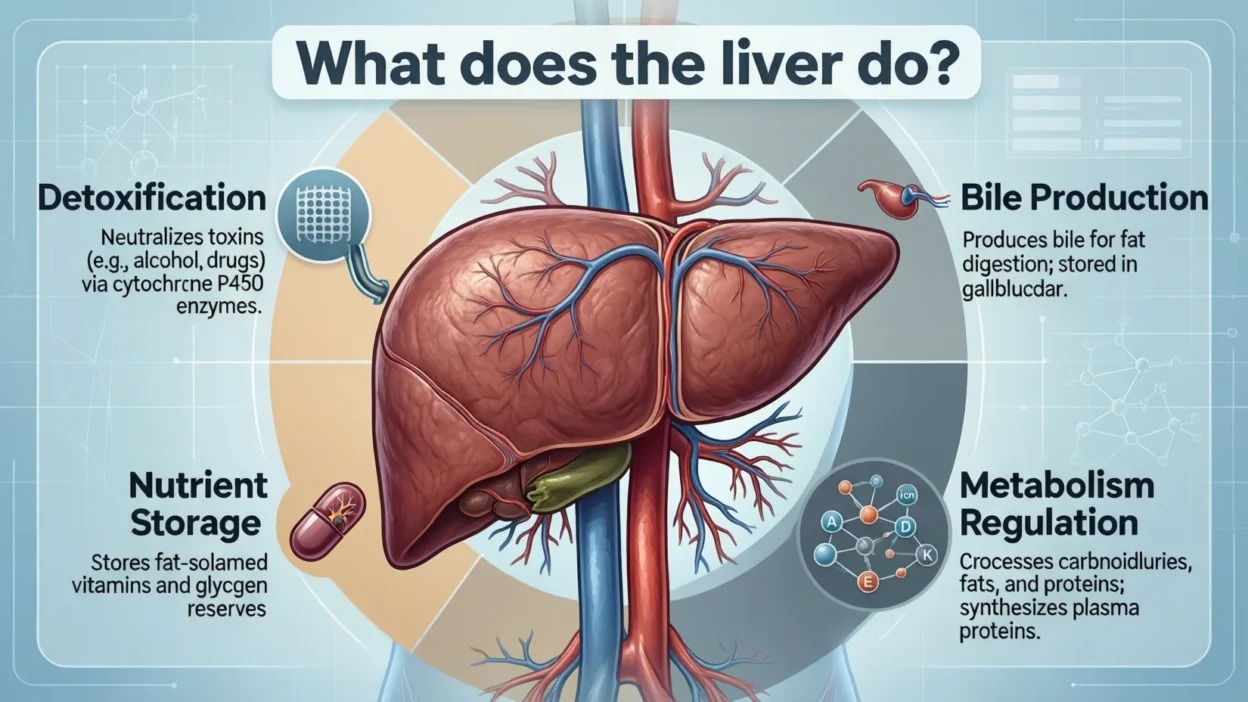
The liver processes nutrients, detoxifies the blood, makes important proteins and bile, stores energy, and helps regulate metabolism.
What Is the Liver?
Full form:
There is no abbreviation; the liver is an organ in your body.
Plain-English meaning:
The liver is a large, reddish-brown organ located in the upper right side of your abdomen, just below the ribcage. It’s a vital organ, meaning you can’t live without it. It works behind the scenes to keep your body healthy by processing nutrients, breaking down toxins, and producing essential substances your body needs to function.
Example sentence:
“My doctor said I need to eat healthier to protect my liver.”
Bold summary:
The liver is a vital organ that supports digestion, metabolism, and detoxification in your body.
Main Functions of the Liver
The liver has many jobs. Here’s a breakdown in simple terms:
1. Detoxification
- Filters harmful substances from the blood
- Breaks down alcohol, drugs, and toxins
- Converts waste into forms your body can excrete
2. Digestion Support
- Produces bile, a fluid that helps digest fats
- Helps absorb vitamins A, D, E, and K
3. Metabolism Regulation
- Processes carbohydrates, proteins, and fats
- Converts glucose to glycogen for energy storage
- Helps maintain blood sugar levels
4. Protein Production
- Makes proteins like albumin (maintains blood volume)
- Produces clotting factors to help stop bleeding
5. Storage of Nutrients
- Stores vitamins (A, D, E, K, B12)
- Stores minerals like iron and copper
- Releases stored energy when the body needs it
6. Immune Support
- Removes bacteria and viruses from the blood
- Helps the body fight infections
How the Liver Works with Other Organs
The liver works closely with:
- Gallbladder: stores bile produced by the liver
- Pancreas: assists in metabolism and insulin regulation
- Intestines: absorbs nutrients that the liver processes
- Kidneys: works together to remove toxins
Signs Your Liver Might Be Overworked or Unhealthy
Even though the liver doesn’t hurt when damaged, some warning signs include:
- Yellowing of the skin or eyes (jaundice)
- Fatigue or weakness
- Swelling in the abdomen or legs
- Dark urine or pale stools
- Nausea or loss of appetite
- Easy bruising or bleeding
If you notice these signs, consult a doctor promptly.
Realistic Conversation Examples (Text Style)
- “i need to cut back on alcohol, my liver is tired”
- “the liver helps digest fats, right?”
- “doc said my liver enzymes are high”
- “eating more greens is good for the liver”
- “liver cleans toxins from the blood”
- “i didn’t know it stores vitamins and energy”
- “my liver is working overtime after the party lol”
- “how does the liver affect metabolism?”
Similar Organs and Their Roles
| Organ | Function | How It Differs from Liver |
|---|---|---|
| Kidneys | Filter blood, remove urine waste | Focus on water and urea removal, not nutrients |
| Pancreas | Produces insulin, digestive enzymes | Helps regulate sugar but doesn’t detoxify |
| Gallbladder | Stores bile | Only stores, doesn’t produce or detoxify |
| Spleen | Fights infection, recycles blood cells | Immune support, not metabolism |
FAQs About “What Does the Liver Do?”
1. Can you live without a liver?
No, but you can survive with part of a liver because it can regenerate.
2. Does the liver store energy?
Yes, it stores glucose as glycogen for when the body needs energy.
3. How does alcohol affect the liver?
Excess alcohol can cause fatty liver, inflammation, or cirrhosis, damaging liver function.
4. Can a liver heal itself?
Yes, the liver can regenerate if part of it is healthy.
5. What foods are good for liver health?
Leafy greens, fruits, nuts, fatty fish, and water help protect the liver.
6. Is the liver part of the digestive system?
Yes, it produces bile and helps digest fats.
7. How can I keep my liver healthy?
Eat a balanced diet, avoid excessive alcohol, exercise, and get regular check-ups.
Final Thoughts
So, what does the liver do?
The liver is a vital multitasking organ that detoxifies blood, produces bile for digestion, stores nutrients and energy, regulates metabolism, makes essential proteins, and helps the immune system.
Although it works quietly behind the scenes, it’s essential for overall health. Protecting your liver with a healthy lifestyle ensures your body functions properly and prevents serious disease.