Introduction
Most of us don’t think about the pancreas until it shows up in a doctor’s visit, a health article, or a random late-night Google search.
Maybe you heard someone mention blood sugar, insulin, or digestion and suddenly wondered, wait… what does the pancreas actually do?
It’s one of those organs that works quietly in the background every single day. You don’t feel it, you don’t see it—but without it, your body would struggle big time.
Let’s explain it in a simple, everyday way.
Quick Answer:
The pancreas helps your body digest food and control blood sugar levels.
What Does the Pancreas Do in the Body?
Plain-English explanation
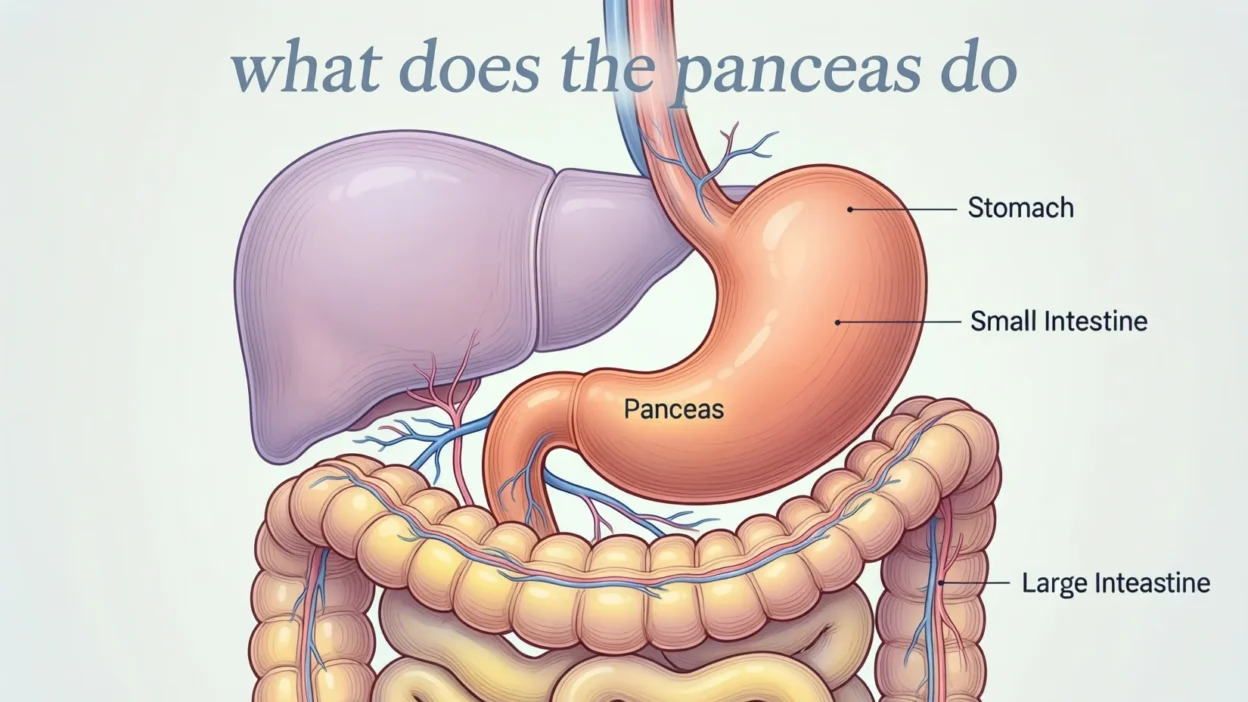
The pancreas is a small organ located behind your stomach. It has two main jobs, and both are extremely important for staying healthy.
- It helps digest food
- It controls blood sugar
Think of the pancreas as a helper that makes sure:
- your food gets broken down properly
- your blood sugar doesn’t get too high or too low
Why the pancreas is important
Without the pancreas:
- digestion wouldn’t work well
- blood sugar would be hard to control
- energy levels could crash
One short example sentence
- the pancreas releases insulin to control blood sugar.
Bold summary:
The pancreas helps with digestion and keeps blood sugar balanced.
The Two Main Functions of the Pancreas Explained
1. Pancreas and Digestion
The pancreas makes special juices called digestive enzymes.
These enzymes help break down:
- fats
- proteins
- carbohydrates
They travel from the pancreas to the small intestine, where digestion happens.
Why this matters:
Without these enzymes, your body can’t absorb nutrients properly.
2. Pancreas and Blood Sugar Control
The pancreas also releases important hormones, mainly:
- insulin
- glucagon
What insulin does
- lowers blood sugar
- helps sugar enter your cells for energy
What glucagon does
- raises blood sugar when it’s too low
Together, they keep your blood sugar balanced.
This is why the pancreas is closely linked to diabetes.
Where Is the Pancreas Located?
- behind the stomach
- near the small intestine
- close to the liver
It’s about 6 inches long and shaped a bit like a flat leaf.
You usually don’t feel it unless there’s a medical issue.
When the Pancreas Isn’t Working Properly
Problems with the pancreas can affect the whole body.
Common pancreas-related conditions
- diabetes (insulin problems)
- pancreatitis (inflammation)
- pancreatic enzyme deficiency
- pancreatic cancer
Common symptoms of pancreas issues
- stomach pain
- trouble digesting food
- unexplained weight loss
- blood sugar problems
If symptoms persist, medical advice is important.
Real-Life Examples (Simple and Relatable)
Here are 8 everyday-style examples to make it clearer:
- the pancreas releases insulin after you eat
- without a healthy pancreas, digestion suffers
- diabetes happens when the pancreas doesn’t make enough insulin
- the pancreas helps turn food into energy
- pancreatic enzymes help break down fats
- blood sugar control depends on the pancreas
- the pancreas works silently every day
- pancreas health affects overall energy
When the Pancreas Works Well vs When It Doesn’t
✅ When the pancreas works properly
- stable blood sugar
- smooth digestion
- steady energy levels
❌ When the pancreas doesn’t work properly
- blood sugar spikes or drops
- digestive issues
- fatigue
Simple comparison table
| Situation | What Happens | Why It Matters |
|---|---|---|
| healthy pancreas | balanced digestion | nutrients absorbed |
| insulin problems | high blood sugar | diabetes risk |
| enzyme shortage | poor digestion | nutrient loss |
Similar Body Parts People Confuse With the Pancreas
| Organ | What It Does | How It’s Different |
|---|---|---|
| liver | processes nutrients | doesn’t make insulin |
| stomach | breaks down food | doesn’t control sugar |
| gallbladder | stores bile | no hormones |
| intestines | absorbs nutrients | relies on enzymes |
The pancreas works with these organs but has unique roles.
FAQs About the Pancreas
1. what does the pancreas do exactly?
It helps digest food and control blood sugar.
2. is the pancreas part of digestion?
Yes, it releases digestive enzymes.
3. how is the pancreas linked to diabetes?
Diabetes happens when insulin production or use is affected.
4. can you live without a pancreas?
Yes, but it requires medication and careful management.
5. does the pancreas affect energy?
Yes, through blood sugar control.
6. what foods support pancreas health?
Balanced meals, low sugar, healthy fats, and whole foods.
Final Thoughts
So, what does the pancreas do? In simple terms, it keeps your body running smoothly by helping digest food and controlling blood sugar levels.
Even though it works quietly behind the scenes, the pancreas plays a huge role in your daily energy, nutrition, and overall health. Taking care of it means supporting your entire body.