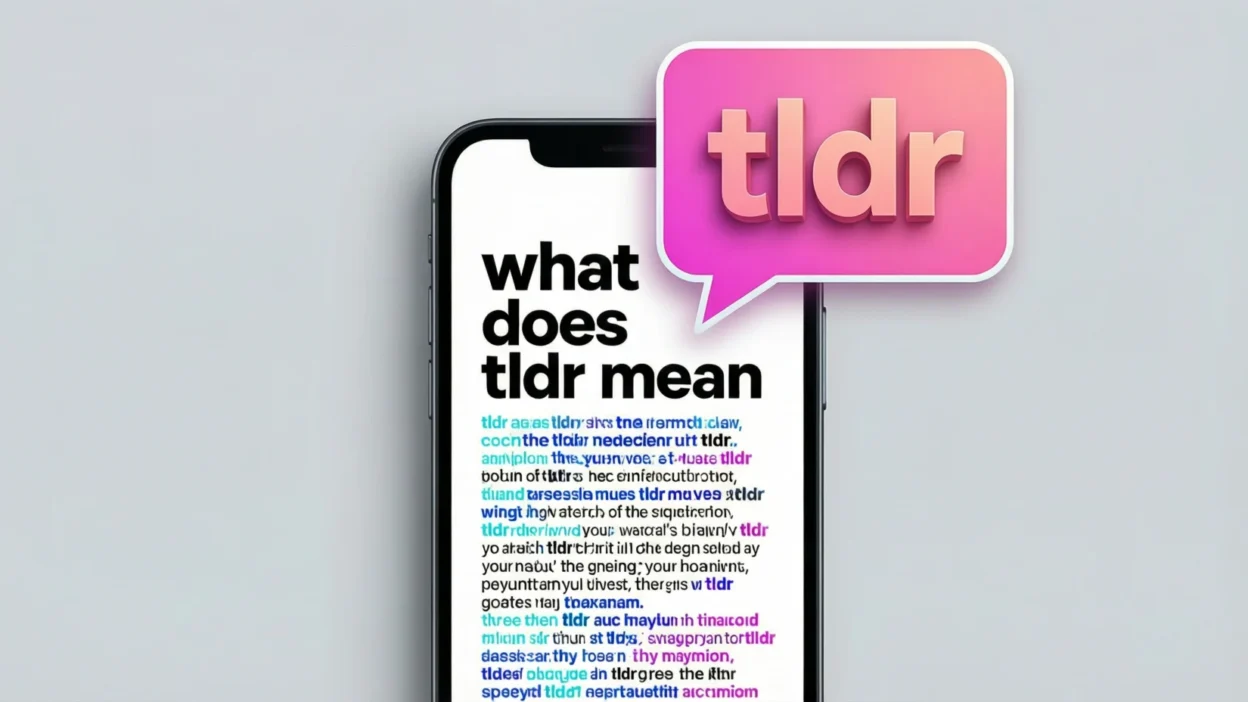
You’re scrolling through a long forum post or a social media thread, and at the bottom someone types, “tldr: just skip to the main point.” You pause — what does tldr mean, and why do people use it everywhere online?
If you spend time in group chats, Reddit discussions, or long text conversations, you’ve probably seen tldr pop up often. It’s a shorthand that saves time, gets to the point, and keeps conversations clear.
Once you understand what it stands for and how people use it in modern texting and social media slang, it becomes easy to spot — and maybe even start using yourself.
Quick Answer: tldr stands for “too long; didn’t read,” used to summarize long messages or posts.
what does tldr mean in text and online
tldr is an internet abbreviation used to give a short summary of a long message, article, or post. People use it to save time and highlight the main point.
plain-english explanation
Imagine reading a huge wall of text online — instead of reading the entire post, you can scroll to a tldr to see the key points quickly. It’s a modern way of saying, “here’s the summary if you don’t want to read everything.”
why people use tldr
- saves time when reading long posts
- makes discussions easier to follow
- adds humor or casual tone to chats
- helps emphasize main points quickly
- fits modern social media and texting shorthand
short example sentence
“tldr: the new update fixes bugs and adds new features.”
bold summary: tldr means “too long; didn’t read,” and it’s used to summarize long content in casual online chats and social media.
where is tldr commonly used online?
You’ll mostly see tldr in informal online spaces where long content or discussions appear.
common platforms
- reddit threads and comments
- discord chats and gaming servers
- twitter/x replies
- long Facebook posts
- messaging apps like WhatsApp or group texts
- article comment sections
tone and communication style
- tone: casual, sometimes humorous
- formality level: informal
- communication vibe: conversational and summarizing
People use tldr when they want to be brief, give a summary, or highlight a key takeaway in online discussions.
realistic conversation examples using tldr
Here are natural, modern chat-style examples written in lowercase to match real online messages:
- “tldr: we’re meeting at 7, don’t be late.”
- “the post was long but tldr: cats are better than dogs.”
- “tldr: game update adds new maps and weapons.”
- “tldr: the main point is to save money first.”
- “read the whole thread or just tldr: he was right.”
- “tldr: the movie was boring and too long.”
- “tldr: pizza party tomorrow at my place.”
- “tldr: they fixed the bug you reported.”
- “tldr: she said yes to the proposal.”
These examples show how tldr is used naturally to summarize long texts.
when to use and when not to use tldr
Understanding the context is important to avoid sounding rude or dismissive.
when to use tldr (do)
- summarizing long posts or messages
- when giving quick takeaways
- in casual group chats or forums
- when adding humor to long content
- when readers are short on time
when not to use tldr (don’t)
- in formal emails or professional writing
- when the full details are important
- when summarizing sensitive topics
- with people unfamiliar with internet slang
- to dismiss someone’s message rudely
small comparison table
| context | example phrase | why it works or doesn’t work |
|---|---|---|
| reddit thread | “tldr: update is live” | works — casual summary |
| group chat | “tldr: meet at 5” | works — quick takeaway |
| professional email | “tldr: project update” | doesn’t work — too informal |
| school essay | “tldr: the chapter explains photosynthesis” | doesn’t work — formal writing |
similar slang words and alternatives to tldr
| slang | meaning | when to use |
|---|---|---|
| brb | be right back | casual chat |
| idk | i don’t know | casual response |
| fyi | for your information | sharing info casually |
| btw | by the way | adding extra info |
| omw | on my way | texting shorthand |
| summary | short explanation | formal alternative to tldr |
quick explanation
- summary can replace tldr in formal contexts.
- fyi and btw are info-sharing, not summaries.
- brb or omw are purely for casual chatting.
frequently asked questions about what does tldr mean
1. is tldr rude?
Not usually. It’s neutral or humorous, but tone matters. If used dismissively, it can seem rude.
2. who uses tldr the most?
Teens, young adults, forum users, gamers, and social media users.
3. can tldr be used in professional emails?
No, it’s too informal. Use “summary” or “key points” instead.
4. is tldr always at the end of a post?
Mostly, yes. It summarizes the content, usually at the end or beginning.
5. can tldr be shortened further?
No, tldr is already an abbreviation and widely recognized.
6. does tldr mean the person didn’t read the post?
Yes, literally it means “too long; didn’t read,” but it’s often used just to summarize, not as a criticism.
7. is tldr used only online?
It’s mainly online, in texts, social media, and forums, but it can be used in casual conversation among people familiar with internet slang.
final thought
Understanding what does tldr mean helps you navigate modern texting culture, social media discussions, and long online posts.
The abbreviation stands for “too long; didn’t read” and is used to summarize long messages or highlight key points. While it’s casual and often humorous, knowing when and how to use it properly ensures you communicate clearly without offending anyone.
Using tldr effectively can save time, help you follow online conversations better, and make your messages concise and relatable.