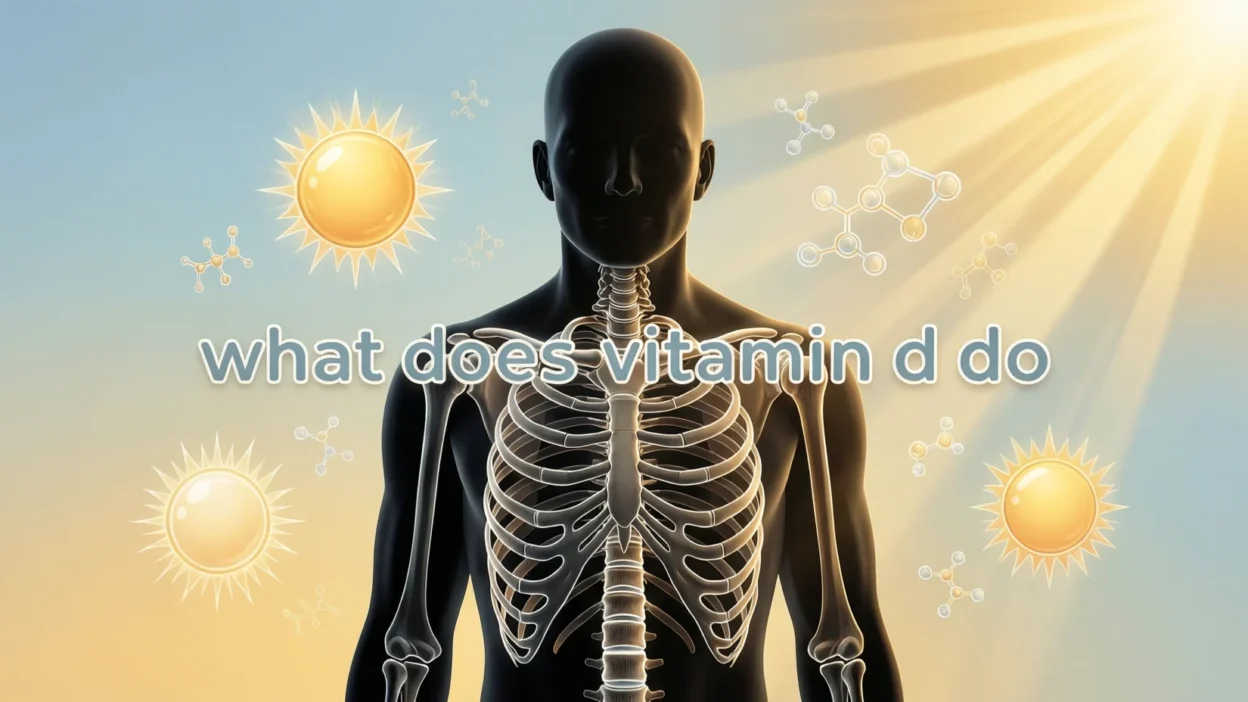
Introduction
You’re scrolling through health posts, watching a reel about supplements, or reading a comment that says “you probably need more vitamin d”. Then you start thinking about it.
You’ve seen vitamin D mentioned everywhere—sunlight, bones, immunity, mood—but no one really explains it clearly. Is it just a “bone vitamin,” or does it do more than that?
If you’ve ever paused and wondered what does vitamin D do, you’re not alone. Let’s break it down in a simple, everyday way that actually makes sense.
Quick Answer:
Vitamin D helps your body absorb calcium, keeps bones strong, supports the immune system, and plays a role in mood and muscle health.
What Does Vitamin D Do? (Meaning Explained Simply)
Vitamin D is an essential nutrient that works more like a hormone than a regular vitamin.
Plain-English explanation
Vitamin D helps your body:
- absorb calcium and phosphorus
- build and maintain strong bones and teeth
- support your immune system
- keep muscles working properly
- support brain and mood health
Without enough vitamin D, your body struggles to use calcium—even if you eat plenty of it.
Why people talk about vitamin D so much
People talk about vitamin D because:
- many people are deficient
- it’s linked to immunity and energy
- sunlight is a major source
- low levels can cause health issues
One short example sentence
- my doctor said i need more vitamin d for my bones.
Bold summary: Vitamin D helps your body use calcium, strengthens bones, and supports immunity, muscles, and overall health.
Where Does Vitamin D Come From?
Vitamin D is unique because your body can make it naturally.
Common sources of vitamin D:
- sunlight exposure
- fatty fish (like salmon and tuna)
- egg yolks
- fortified milk and cereals
- supplements
Tone and usage context
- Tone: neutral, educational
- Formality: works in casual and medical conversations
You’ll see vitamin D mentioned in health articles, doctor visits, fitness content, and supplement discussions.
How Vitamin D Works Inside the Body
Here’s what happens when you get vitamin D:
- sunlight hits your skin
- your body produces vitamin D
- it helps absorb calcium from food
- calcium strengthens bones and teeth
- immune cells function better
That’s why vitamin D is often called the “sunshine vitamin.”
Real-Life Examples (Simple and Relatable)
Here are 8 realistic examples of how people talk about vitamin D:
- i started taking vitamin d and my energy feels better
- doctor said my vitamin d was low
- i barely go outside, so i take vitamin d
- vitamin d helps keep bones strong
- winter always messes with my vitamin d levels
- kids need vitamin d for growth
- vitamin d supports immunity
- sunlight is the easiest vitamin d source
These examples show how vitamin D fits into everyday health talk.
When Vitamin D Is Especially Important
✅ Vitamin D is important when:
- you don’t get much sunlight
- you have bone or joint issues
- you feel frequent fatigue
- your immune system is weak
- you’re older or growing (kids/teens)
❌ Vitamin D alone is NOT enough when:
- calcium intake is very low
- medical conditions affect absorption
- taken without guidance at high doses
Comparison table
| Context | Example | Why It Works / Doesn’t |
|---|---|---|
| bone health | vitamin d helps absorb calcium | correct |
| immunity | vitamin d supports immune response | helpful |
| instant cure | vitamin d fixes everything | incorrect |
| overdose | taking too much vitamin d | harmful |
What Happens If You Don’t Get Enough Vitamin D?
Low vitamin D levels can lead to:
- weak or soft bones
- bone pain or back pain
- muscle weakness
- fatigue
- frequent illness
In children, severe deficiency can cause rickets. In adults, it can contribute to bone thinning.
Similar Nutrients and Related Vitamins
Vitamin D often works together with other nutrients.
| Nutrient | What It Does | When Used |
|---|---|---|
| calcium | builds bones | daily diet |
| vitamin k | directs calcium | bone health |
| magnesium | activates vitamin d | muscle support |
| vitamin c | immunity support | overall health |
| zinc | immune function | illness prevention |
Vitamin D doesn’t work alone—it’s part of a system.
FAQs About Vitamin D
1. what does vitamin d do for the body?
It helps absorb calcium, supports bones, immunity, muscles, and mood.
2. is vitamin d only for bones?
No. It also supports immune and muscle function.
3. can you get vitamin d from sunlight?
Yes, sunlight is one of the main sources.
4. how do i know if i’m low in vitamin d?
A blood test is the most accurate way.
5. is vitamin d safe to take daily?
Yes, in recommended amounts.
6. does vitamin d help immunity?
Yes, it supports immune system function.
Final Thoughts
So, what does vitamin D do? It helps your body absorb calcium, keeps bones strong, supports immunity, and plays a role in muscle and mood health.
It’s one of the most important nutrients—and one of the most commonly lacking. Whether through sunlight, food, or supplements, getting enough vitamin D helps your body function the way it should. Simple vitamin, big impact.